Why Are First Aid Kits Red? Does Color Actually Matter?
Ever consider a peculiar detail about first aid kits?
Mention "first aid kit," and a clear image forms: a bright red bag, marked with that familiar cross. It's the standard picture.
But have you ever really thought: why are first aid kits red?
Is the color required? What about blue, black, or orange?
The reason, it turns out, is quite simple.
Why So Many First Aid Kits Are Red
A main reason is purely practical: red is impossible to miss.
Imagine this: someone needs a bandage. You're in a messy garage, a busy office, a large campsite, or a moving car. You look around. Six bags sit there. All black.
"Which one is the first aid kit?"
Not ideal.
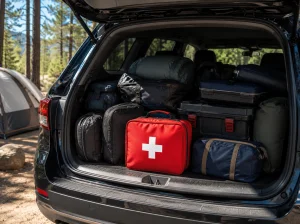
A bright red first aid bag cuts through the clutter of backpacks, tool cases, luggage, and outdoor gear. It demands attention, making quick identification easy when supplies are needed fast.
The color itself won't heal an injury. But if it saves crucial seconds finding gauze or an antiseptic wipe, it's already done its job.
Must a First Aid Kit Be Red?
No, it doesn't.
No single color suits every situation. In reality, first aid kit colors vary widely: red, orange, blue, black, and many others.
What truly matters is how easily the kit is spotted where it's stored.
Think of it this way: the "best" color is simply the one that lets you confidently say, "Right there!" without a frantic search.
Red: The Iconic, Unmissable Choice
Red is the most recognized color for emergency supplies.
It's bright, obvious, and clearly different from everyday items. Many people automatically link red with urgency, safety rules, and emergency readiness.
This is why a red first aid bag works best in homes, cars, workplaces, wilderness, and any place where quick identification is key.
Simple. Known. Obvious.
Sometimes, that's exactly what's needed.
Orange: The "I'm Here!" Statement
Orange is another strong option when visibility is vital.
For campers, hikers, road-trippers, or outdoor workers, an orange first aid kit stands out against dark backpacks, equipment cases, and general gear.
It changes conversations:
“Where’s the first aid kit?”
“That bright orange bag, right there.”
Problem solved.
For outdoor and vehicle uses, choosing a high-visibility emergency bag color ensures basic supplies are found without delay when truly needed.
Blue: Clean, Discreet, Ready for Daily Use
Not every first aid kit needs to look like a loud alarm.
Blue offers a cleaner, calmer look that fits well in homes, offices, travel bags, and general settings.
With a clear first aid symbol or a well-designed exterior, a blue kit remains easy to spot without the aggressive presence of bright red or orange.
Sometimes, you just need something organized, accessible, and simple to put away.
Blue does the job.
Black: Discreet and Practical, But Don't Lose It
Black first aid bags look sleek and professional, often blending perfectly with vehicle tools, camera equipment, work supplies, or outdoor gear.
Yet, there's a catch.
If your camera bag is black, your two tool bags are black, your three backpacks are black, and your first aid kit is also black...
Well.
Good luck finding it.
If you choose black as your emergency bag color, a clear first aid symbol or a specific, well-known storage spot becomes even more important.
Otherwise, you might hear this:
“It’s in the black bag.”
“Which black bag?”
Exactly.
So, What's the "Best" Color for a First Aid Kit?
Honestly, there's no single, definite answer.
For camping, outdoor activities, or vehicle emergency supplies, a red or orange high visibility first aid kit will likely be the easiest to spot.
For homes, offices, and travel, blue offers a neater everyday appearance while still being easy to recognize.
And if you prefer something subtle or need to match existing professional equipment, black can work well—provided everyone knows exactly which black bag it is.
The real question isn't:
“Is my first aid kit the correct color?”
It’s:
“If I suddenly need it, can I find it in a few seconds?”
How to Boost First Aid Kit Identification
When thinking about how to identify a first aid kit, try a simple mental exercise.
Imagine someone unfamiliar walks into your room, garage, vehicle, campsite, or workspace, completely unaware of where your supplies are.
You tell them:
“Grab the first aid kit.”
Do they find it almost instantly?
Or do they look around, confused, asking:
“Uh...which one?”
If your answer is the latter, it might be time to rethink the kit's color, labeling, or placement.
A high visibility first aid kit certainly helps, but color is just one part. A recognizable first aid symbol, a consistent storage place, and ensuring family, employees, or team members know its location are equally, if not more, crucial.
Because when emergencies happen, no one wants to play:
“Guess which bag has the bandages.”
So, Does First Aid Kit Color Actually Matter?
Yes—but it's not the only factor.
Red is common because it's very noticeable, instantly recognizable, and widely linked with emergency supplies.
However, red isn't the only practical choice.
Blue, black, and orange first aid kits can all perform extremely well, depending on their intended environment and use.
Ultimately, the most important qualities are simple:
Easy to see.
Easy to find.
Easy to grab.
Your first aid kit can be red, blue, black, or orange.
As long as someone can quickly scan their surroundings in an emergency and immediately say:
“Yep. It’s right there.”
Then the color has done its job.
FAQ
Q1: Does a first aid kit have to be red?
No. First aid kits come in red, blue, black, orange, or other colors. The main point is that the kit can be quickly identified and reached within its intended setting.
Q2: Why are red first aid bags so common?
A red first aid bag is generally very easy to spot, and many people already associate red with urgent situations and safety equipment. This natural familiarity helps with fast identification.
Q3: What color first aid kit is best for outdoor use?
Red and orange are often the most practical choices for outdoor environments because they stand out strongly against many types of camping and wilderness gear. The best choice, however, depends on the specific colors of the equipment and surroundings where the kit will be kept.
Q4: Is a black first aid kit a bad choice?
Not at all. Black can look sleek, professional, and blend well with vehicle, outdoor, or professional equipment. If the surrounding gear is mostly black, a clear first aid symbol or a dedicated storage spot becomes even more important for easy identification.
Q5: Where does a blue first aid kit work best?
Blue first aid kits are very effective for homes, offices, travel, and general daily use. When paired with a recognizable first aid symbol, they remain easily identifiable while offering a more understated look.
Q6: How can I make my first aid kit easier to find?
Choose a color that stands out from its environment, use a clear first aid symbol, keep the kit in a consistent, known spot, and make sure all potential users know where it's stored.