First Aid Kit "Pieces": What Does the Number Really Mean?
Looking at first aid kits, you often see numbers like these:
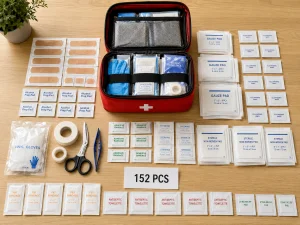
152PCS.
160PCS.
379PCS.
Your first thought might be, "379 pieces? How much can one kit hold?"
It’s easy to assume a 379-piece kit automatically beats a 152-piece one. A bigger number just feels better.
But that’s not always the case.
Understanding what a first aid kit piece count truly means changes how you compare options. "PCS" (pieces) typically refers to the total number of individual items in the kit. Not distinct types of items, but individual units.
Consider this:
One adhesive bandage counts as one piece.
One alcohol prep pad? Another piece.
One individually wrapped gauze pad? One more piece.
So, a "379-piece" first aid kit almost certainly doesn't contain 379 unique types of supplies.
No.
"379 pieces" and "379 different supplies" are entirely different concepts.
How Is a First Aid Kit Piece Count Calculated?
Let's clarify with an example:
Imagine a kit with 50 adhesive bandages, 30 alcohol prep pads, 10 gauze pads, plus medical tape, gloves, and a few other items. Each of these individual items, regardless of size or commonality, adds to the total first aid kit piece count.
This explains why a 152-piece first aid kit isn't filled with 152 distinct products. It’s likely an accumulation of multiple bandages, wipes, gauze pads, and other daily essentials, totaling 152 units.
The same logic applies to a 379-piece first aid kit.
379 sounds impressive. It’s a substantial number.
But a more critical question is:
How are those 379 pieces actually distributed?
What if 200 of them are just small, identical adhesive bandages?
Technically, it's still a 379-piece kit.
But do you need that many of the same bandage?
Perhaps. Perhaps not.
This shows why simply looking at the big number on the box rarely tells the full story.
First Aid Kit Shopping: More Than Just a Number
Once you understand how first aid kit pieces are counted, you can compare kits based on their actual contents, rather than just choosing the one with the highest number.
A 379-piece kit might suit some. A 152-piece kit might be better for others.
Before you decide, consider these factors.
1. Supply Variety: How Many Different Types of Supplies?
Plenty of adhesive bandages are useful.
But what else is inside?
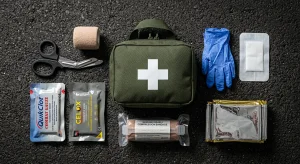
Are there gauze pads in different sizes?
Do wound-cleaning solutions come with it?
What about medical tape, gloves, or other practical items specific to your needs?
Quantity matters, but so does diversity.
Imagine opening a kit with an impressively high piece count, only to think:
“Great... I have enough tiny bandages for three years.”
Meanwhile, the specific type of gauze you needed? Only two available.
This is why examining supply variety is important.
2. Quantity Distribution: Where Do the Pieces Come From?
A truly useful piece count isn't just about a large number on the packaging.
It's also about how those quantities are spread across different supplies.
It's reasonable for frequently used disposables to appear in larger quantities. But if most of the total piece count comes from just one or two categories of small, consumable items, that grand total can be misleading.
Take a moment to check the contents list.
Seriously.
It usually reveals much more than a simple "152PCS" versus "379PCS" comparison.
3. Organization: Supplies Are Only Great if You Can Find Them
Here’s another practical consideration:
How is everything arranged?
A first aid kit might hold hundreds of items, but if they're all jumbled, finding what you need quickly becomes a frustrating task.
When an injury occurs, you don’t want to dump the entire kit out and say:
“Okay... just give me a second.”
Good organization ensures supplies are easy to identify and access.
So, yes, 379 pieces can sound fantastic.
But 379 pieces you can't find in an emergency?
Not helpful.
4. Intended Use: Where Will You Use the Kit?
This is arguably the most important question.
Is this kit for your home?
Your car?
Your office?
For camping or outdoor trips?
For a larger family or group?
A 152-piece first aid kit might be perfectly fine for vehicle storage, personal travel, or daily preparedness, depending on its specific contents.
A more extensive 379-piece first aid kit, with more common items, could suit busy households, groups, events, or situations needing ample backup supplies.
There's no single "magic" piece count that is universally "best."
The real question is:
Does the kit’s composition match how you plan to use it?
Comparing First Aid Kit Piece Counts: The Smart Way
Next time you see a prominent "379PCS" label, resist concluding immediately:
"This one is definitely better than the 152-piece kit."
Instead, review the detailed contents list first.
How many bandages are included?
How many cleaning supplies?
Is there a practical variety of sizes and supply types?
Are commonly used items present in sensible quantities?
Is the kit designed for easy organization and retrieval?
And most importantly:
Are these specific supplies truly useful for the kit's intended purpose?
That's the true essence of understanding first aid kit contents.
Because a first aid kit isn't a game of Pokémon.
Piece count isn't its combat power.
A larger number doesn't automatically "level up" your kit into a superior option.
The best kit is the one you can open in a moment of need and confidently say:
“Yep. That’s exactly what I require.”
Not:
“Wow, 379 pieces... but where's the item I’m actually searching for?”
FAQ
Q1:What does “pieces” mean in a first aid kit?
The piece count generally refers to the total number of individual items within the kit. For example, one adhesive bandage, one alcohol prep pad, or one individually packaged gauze pad can each count as one piece. Exact counting methods can vary among products and manufacturers.
Q2:Does a 379-piece first aid kit contain 379 different supplies?
Generally, no. A 379-piece first aid kit usually contains 379 total individual items, including multiple quantities of common supplies like adhesive bandages, wipes, gauze pads, and other consumables.
So, 379 pieces? Yes.
379 completely unique items? Probably not.
Q3:Is a higher first aid kit piece count always better?
Not necessarily. Beyond just the first aid kit piece count, consider the variety of supplies, how quantities are distributed, the kit's organization, and its intended use.
A higher-count kit might suit those needing numerous backup consumables, while a smaller kit with a more balanced mix of supplies could be more practical for specific situations.
Q4:Why do some first aid kits have such high piece counts?
Individually counted consumable items can quickly inflate the total. For example, dozens of adhesive bandages combined with dozens of cleaning wipes can significantly boost the overall piece count.
The prominent number tells you how many pieces are there. The detailed contents list tells you precisely what you're getting.
Q5:What should I look for when buying a first aid kit?
Do not rely solely on the piece count. Instead, examine the actual contents, the diversity of supplies, their quantity distribution, the kit’s organization, and its intended application. Determine if the kit genuinely suits your home, car, workplace, travel plans, or outdoor activities.
Don't just count the pieces. Scrutinize what those pieces actually are.