Running First Aid Kit: What Runners Should Carry for Training and Race Day
On the surface, running seems simple.
Lace up. Grab headphones. Start playlist. Hit the road.
That’s all there is to it, right?
Not quite.
Anyone who’s run a 5K, pushed through a 10K, navigated a tough trail race, or logged serious marathon training miles understands the reality. Your training plan might be perfect, but your body, especially your feet, often has other plans.
One day, your shoes feel incredible. Every stride is pure joy.
The next, you’re six miles in, and your heel makes an executive decision:
“Today, we’re making a blister.”
Add in the unpredictability of uneven trails, loose rocks, low branches, and long exposure to the elements, and minor scrapes or cuts become almost inevitable.
Most of the time, these are just small annoyances.
But when you’re five miles from your car, that “little problem” can quickly turn into a big headache.
This is exactly why a lightweight running first aid kit proves its value—especially for long-distance training, trail running, or any route far from home.
Does Every Runner Need a Fully Stocked First Aid Kit?
No, not at all.
If you're just doing a quick three-mile loop in your neighborhood, a massive bag of medical supplies is probably overkill.
A smart first aid kit for runners prioritizes portability.
A few assorted adhesive bandages, antiseptic wipes, small gauze pads, and basic blister care items are usually enough for daily runs.
The rule is simple:
Pack what you’ll actually use.
There’s no need to bring a mini-hospital on your morning jog.
However, long-distance training and trail running completely change this equation.
Imagine this: You’re deep in the woods, miles from your car, the parking lot, or any main road.
Suddenly, you need a bandage, and then it hits you:
“Oh, right. The first aid kit is still in the car.”
Great.
Except the car is now seven miles away.
For longer, more isolated routes, a compact trail running first aid kit makes perfect sense. The trick is keeping it light enough to carry, while still having essential supplies handy.
Blisters: Every Runner's Uninvited Guest
When people think about running safety essentials, serious sports injuries often come to mind.
But let’s be realistic.
For most everyday runners, the common issues are much less dramatic:
Blisters.
Chafing.
Scrapes.
Small cuts.
Once those marathon training miles add up, even shoes that have been loyal companions for months can suddenly turn on your heel.
Mile 12:
“Feeling fantastic.”
Mile 13:
“Hmm… something’s off with my heel.”
Mile 14:
“Oh.”
Yep.
We’ve all experienced it.
For those extended training runs, having a few blister-specific items, adhesive bandages, and basic wound-cleaning supplies is much more practical than carrying gear you don’t know how to use—or simply don’t need.
What Belongs in a Small Running First Aid Kit?
A personal running first aid kit doesn't need to be complex.
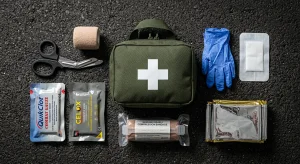
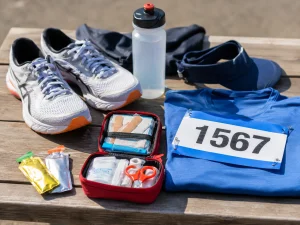
Depending on your distance, terrain, and individual needs, essential items might include adhesive bandages, antiseptic wipes, small sterile gauze pads, medical tape, and blister care products.
For trail runners, portability is key. A trail running first aid kit must be streamlined enough to fit into a running vest, pack, or other gear without turning your run into an unwanted weightlifting session.
Again, the goal isn't to prepare for every possible medical emergency.
It's about having immediate access to basic supplies for minor problems, and knowing when a situation requires professional help.
Race Day Emergency Kit vs. Medical Station: Know the Difference
Whether you're lining up for a 5K, 10K, half marathon, or full marathon, your personal marathon first aid kit or race day emergency kit should stay minimal.
Your personal supplies are best for dealing with nuisances like a small blister or a superficial scrape.
However, an official race Medical Station operates on a completely different scale.
Race medical teams are equipped to handle more serious health and injury concerns. Your personal first aid items should never replace trained medical professionals.
If you experience a severe fall, heavy bleeding, breathing difficulties, chest pain, disorientation, loss of consciousness, or any other true medical emergency, do not think:
“I think I have two gauze pads in my pack.”
No.
That is the moment to immediately alert race staff, find the nearest Medical Station, or contact professional emergency medical services.
The Best Running First Aid Kit Is the One You Actually Carry
For runners, bigger isn’t always better.
Let’s be honest: if your kit is so cumbersome that you eye it before every run and think:
“Nah, I’m leaving that at home today.”
Then it's useless.
The most effective first aid kit for runners perfectly matches your route, distance, and training type.
Short city run?
Keep it ultra-simple.
Long-distance marathon training?
Focus on blister care and common minor ailments.
Trail running?
Portability and your distance from external help become critical.
Race day?
Pack a few personal basics if you want, but know exactly where official Medical Stations are located.
Ultimately, the ideal scenario is finishing your run without ever needing to open your first aid supplies.
Honestly, that’s a win.
But when you're at Mile 8, and your heel suddenly protests—and you happen to have exactly what you need?
You’ll probably think:
“Yep. So glad I packed that.”
FAQ
Q1:Do I need to carry a first aid kit on every run?
Not necessarily. For short city runs, it depends on your route and personal comfort. However, for longer training sessions, remote routes, or trail running, a few lightweight, basic supplies can be incredibly helpful.
Q2:What should I put in a trail running first aid kit?
A basic trail running first aid kit might include adhesive bandages, antiseptic wipes, small gauze pads, medical tape, and blister care items. Prioritize portability and adjust contents based on the length and remoteness of your planned route.
Q3:Should I carry a first aid kit on marathon race day?
You might carry a few lightweight personal items for minor issues. However, a personal marathon first aid kit or race day emergency kit is not a substitute for the comprehensive medical support at official race Medical Stations.
Q4:What minor problems are common for runners?
Common minor issues include blisters, chafing, small scrapes, and superficial cuts. These often become more noticeable during extended training or when running on outdoor terrains.
Your feet might feel incredible for the first ten miles, then suddenly decide otherwise.
Yes, runners understand this feeling all too well.
Q5:Is a bigger running first aid kit always better?
No. For runners, portability and practical utility often matter more than sheer size. The most effective running first aid kit perfectly suits your training distance, route, and personal needs—and is compact enough that you'll consistently bring it along.
Because a bulky first aid kit gathering dust at home?
Well, it definitely won’t be helping you at Mile 10.