Horseback riding always looks pretty great in photos.
A sun-drenched day, a winding trail, a calm mount, and an entire afternoon free from work emails—sounds idyllic, right?
But let's be real. Anyone who's spent a full day in the saddle or mucking about the barn knows there's far more to it than simply climbing on and admiring the scenery.
You might spend your morning hauling tack, wrestling with a saddle, leading horses, scrubbing stalls, and logging hours on foot in those riding boots. Minor scrapes, small cuts, chafing, or a blister courtesy of your gear?
Oh yeah, that's par for the course.
And once you head out on a trail, things get even more down-to-earth.
Imagine this: You're miles from the barn, your truck, or the main building when you suddenly realize you need a bandage—and then remember your first aid kit is lounging comfortably back in the car.
Well...that's not exactly helpful.
That's precisely why a well-stocked horseback riding first aid kit isn't just an option; it's a practical necessity for riders, whether they're at the barn or deep on the trail.
First Things First: This Kit Is for the Rider, Not the Horse
This distinction is critical.
The equestrian first aid kit we're discussing here is specifically for basic human first aid. It is absolutely not a veterinary kit for treating equine injuries.
Both horse and rider require emergency supplies, of course—but those are two distinctly different inventories.
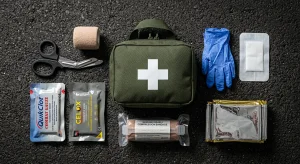
A fundamental first aid kit for horse riders should contain items like adhesive bandages in various sizes, sterile gauze pads, medical tape, antiseptic wipes, disposable gloves, and basic wound cleansers.
For longer excursions, you'll also want to consider provisions for treating minor blisters or skin irritation from your riding gear.
Because, let's be honest, realizing halfway through a trail ride that your new boots are shredding your feet?
Yeah. No fun at all.
And your horse, bless its heart, isn't likely to shorten the journey home just because your heels are screaming.
Is a Barn First Aid Kit Sufficient?
Not always.
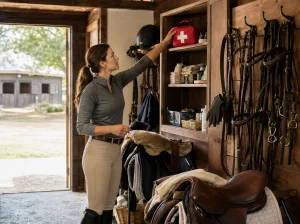
A stationary barn first aid kit is essential for the tack room, staff area, or any central location easily accessible to riders and barn staff. It's invaluable for the minor cuts, scrapes, and daily mishaps that occur during barn work.
But here's the catch:
What happens when you're already miles deep on the trail?
That perfectly stocked kit back at the barn might be fantastic—but it's also miles away, doing you no good.
For trail rides or activities that take riders beyond the immediate vicinity of the main building, a compact, portable horse trail safety kit is the smart choice. Depending on your setup, it can ride along in a saddle bag, vehicle, or other riding gear.
The core principle is quite straightforward:
You go. The kit goes.
Or at the very least, don't wait until you're in a pinch to suddenly wonder:
"Wait...did we leave the first aid kit back at the barn?"
Yep.
That's hardly the ideal moment for that realization.
Rider Emergency Supplies Should Be Easy to Reach
A rider's first aid kit doesn't need to be massive.
What truly matters is its accessibility: stored practically, easy to carry, and that everyone knows exactly where to find it.
Keep a fixed kit at the barn.
Carry portable rider emergency supplies for extended trail rides.
Headed to an off-site clinic or equestrian competition? Having basic supplies in your vehicle is another smart move.
And don't forget to inspect your kit periodically.
Used the last bandage? Replenish it.
Packaging damaged or damp? Replace it.
Half the supplies gone after your last trail ride?
Better to catch that before the next one starts.
Naturally, these basic first aid supplies are for minor cuts, scrapes, and everyday rider mishaps. Serious falls, heavy bleeding, loss of consciousness, or other medical emergencies demand immediate professional medical attention.
Ultimately, a horseback riding first aid kit probably won't be the flashiest piece of equestrian gear you own.
Nobody's standing around the barn bragging:
"Wow, check out my incredible first aid kit."
But when you're an hour into a trail ride and desperately need a bandage—and you can grab one instantly?
Trust us.
You'll be immensely grateful you considered it before ever leaving the barn.
FAQ
Q1: Do I need to carry a first aid kit every time I ride?
You don't necessarily need a bulky kit for every single ride. However, for longer trail rides or routes that take you far from the barn or your vehicle, a small, portable first aid kit is an absolute must. A first aid kit sitting miles away is utterly useless in a real-time emergency.
Q2: Where should a barn first aid kit be kept?
Position it in the tack room, a staff area, or any easily accessible spot for riders and barn workers. Crucially, don't stash it away in a cabinet only one person knows about. Nobody wants to embark on a barn-wide scavenger hunt when someone needs a bandage, fast.
Q3: How is a horse trail safety kit different from a regular first aid kit?
The primary difference lies in portability. A trail kit is designed to be lightweight and compact, easily stowed in a saddle bag, vehicle, or other riding gear, ensuring essential supplies are always with the rider.
Q4: Can this first aid kit be used to treat an injured horse?
This article focuses exclusively on basic human first aid supplies for riders. Equine injuries demand entirely different supplies and care protocols. Depending on the situation, implement appropriate equine first aid measures and contact a veterinarian as needed.
Q5: How often should riders check their first aid supplies?
Inspect your kit regularly and promptly restock any used items. Damaged, damp, or expired supplies should be replaced immediately. Discovering an empty package precisely when you need something?
Yeah, that's far too late.