Nothing beats that first glorious run on a powder day. But even the most experienced skiers and snowboarders know the mountain can be unpredictable: icy patches, sudden falls, biting cold, and rapidly changing weather all pose risks.
While ski resorts always have emergency services on standby, carrying a reliable ski first aid kit means you can handle minor injuries and unexpected issues immediately. This prevents them from escalating into bigger problems.
Consider a compact, waterproof first aid kit as mandatory gear for any winter adventure. This applies whether you're carving fresh tracks, hiking snowy trails, or just exploring in the cold.
Common Ski & Snowboard Injuries
Winter sports are exhilarating, but even pros take spills. Understanding common injuries helps with smart preparation.
Wrist Injuries and Sprains
Wrist sprains and fractures are common for snowboarders. The natural instinct to break a fall with your hands often causes these injuries.
Solid wrist guards and a well-stocked first aid kit can significantly reduce the impact of these frequent mishaps.
Knee Injuries
Skiers are more prone to knee issues, typically from twisting falls. Rigid ski boots and fixed bindings unfortunately increase stress on critical knee ligaments.
For minor swelling and discomfort, a compression wrap and an instant cold pack are invaluable.
Cuts, Bruises, and Blisters
Long days on the slopes, combined with bulky equipment, often result in:
- Small cuts
- Bruises
- Blisters
- Skin irritation
Basic supplies like adhesive bandages, antiseptic wipes, gauze, and blister pads are often the most-used items in any winter first aid kit.
Cold Weather Injuries
When temperatures drop, new dangers emerge.
Frostbite
Frostbite typically attacks exposed areas first. Watch these areas:
- Fingers
- Toes
- Ears
- Cheeks
Early signs include numbness, tingling, or subtle changes in skin color.
Hypothermia
Extended cold exposure can lead to hypothermia. Initial symptoms might include:
- Extreme tiredness
- Confusion
- Uncontrollable shivering
- Poor coordination
Dressing in layers, taking frequent breaks, and having emergency supplies on hand are your best defenses against cold-related risks.
Basic First Aid on the Slopes: Quick Tips
Knowing how to react when an accident happens can change an outcome.
Move to Safety
If someone falls, your first priority (if safe) is to gently move them out of the path of oncoming traffic.
However, for serious injuries—suspecting fractures, head trauma, or spinal concerns—do not move them. Call ski patrol immediately.
Treat Minor Injuries Promptly
For small sprains and bruises:
- Rest the affected area
- Apply a cold pack
- Use compression for support
- Elevate it when possible
For small cuts:
- Clean thoroughly with antiseptic wipes
- Cover with sterile gauze or a bandage
- Apply direct pressure if bleeding persists
Guard Against Frostbite
If frostbite is a concern:
- Get to a warm spot immediately
- Rewarm the area slowly and gently
- Never rub the skin
- Avoid direct heat sources
For any severe symptoms, seek professional medical attention without delay.
Building Your Essential Ski First Aid Kit
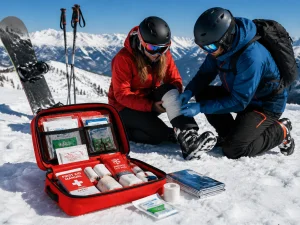
An effective ski first aid kit must be light, tough, and designed for outdoor use.
Wound Care Essentials
Stock these fundamental items:
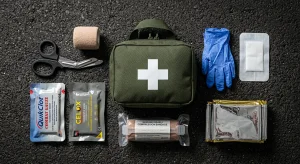
- Adhesive bandages (various sizes)
- Sterile gauze pads
- Medical tape
- Antiseptic wipes
- Blister treatment patches
Injury Support Must-Haves
Consider these helpful additions:
- Elastic compression wrap
- Instant cold pack
- Pain relief medication
- Medical scissors
- Nitrile gloves
Cold Weather Specifics
For any winter expedition, these are smart additions:
- Emergency blanket
- Hand warmers
- SPF lip balm
- Mini sunscreen
- Emergency contact information card
Why Choose a Waterproof Outdoor First Aid Kit?
Winter environments are harsh on standard medical supplies. Snow, moisture, and temperature fluctuations quickly render poorly protected equipment useless.
A top-tier outdoor first aid kit provides:
✔ Water-resistant storage
✔ A compact design that fits in backpacks and jacket pockets
✔ Durable materials built for outdoor use
✔ Immediate access when seconds count
✔ The specific supplies needed for common injuries
Whether you're planning an epic ski trip or just exploring local winter trails, a dependable first aid kit is key to staying prepared and enjoying the adventure.
Winter Sports Safety: Pre-Trip Checklist
Preparation is your best defense against unexpected incidents on the mountain.
Before you hit the slopes:
- Inspect all your equipment thoroughly
- Always wear a properly fitted helmet
- Layer up in weather-appropriate clothing
- Stick to runs within your skill level
- Take regular breaks to rest and rehydrate
- Carry a compact first aid kit
A few moments of smart preparation dramatically boost your confidence and enjoyment on any winter adventure.
FAQ
Q1. Do I need a first aid kit for skiing?
Absolutely. A compact ski first aid kit lets you quickly manage common issues like cuts, blisters, bruises, and minor sprains, ensuring you can keep enjoying your winter activities.
Q2. What should I carry in a ski first aid kit?
A well-equipped ski first aid kit should contain bandages, gauze, antiseptic wipes, medical tape, blister pads, gloves, a cold pack, and an emergency blanket.
Q3. Can I use a regular first aid kit for skiing?
While a standard home first aid kit might work for very simple injuries, specialized outdoor winter kits are generally more compact, durable, and designed to withstand snow and moisture.
Q4. Where should I store my ski first aid kit?
Always keep your first aid kit in an easily accessible spot, like a ski jacket pocket or backpack, so it's ready the instant you need it.