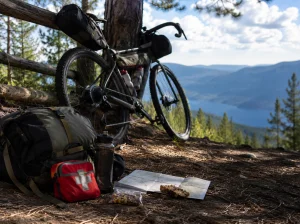
Trailside Trauma and Tarmac Abrasion: Building a High-Utility Bicycle Medical Kit
A quick two-hour road loop demands a completely different setup than a five-day off-grid bikepacking expedition. Yet most riders make one of two mistakes: they carry zero medical gear, or they haul heavy, cluttered kits that sit forgotten at the bottom of a frame bag. A functional bicycle medical kit balances total weight, packed volume, and the real-world probability of specific injuries.
Bikes move fast. Asphalt acts like 60-grit sandpaper, and granite outcroppings don't give way. Whether you spin on pavement, crush gravel, or navigate technical singletrack, your trauma pack must align with your route's risk profile and your distance from a hospital.
The Baseline EDC: Cyclist First Aid Essentials
On short training rides with full cell signal, you do not need a field hospital. You need fast stabilization and immediate cleanup so you can pedal home or reach a vehicle. Stash this compact setup in a weatherproof 0.5L pouch inside a saddlebag or jersey pocket.
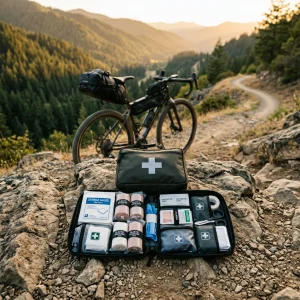
Core first aid checklist for cyclists:
- Cellular Phone & ID: Your most effective tool near civilization. Seal it in a waterproof baggie.
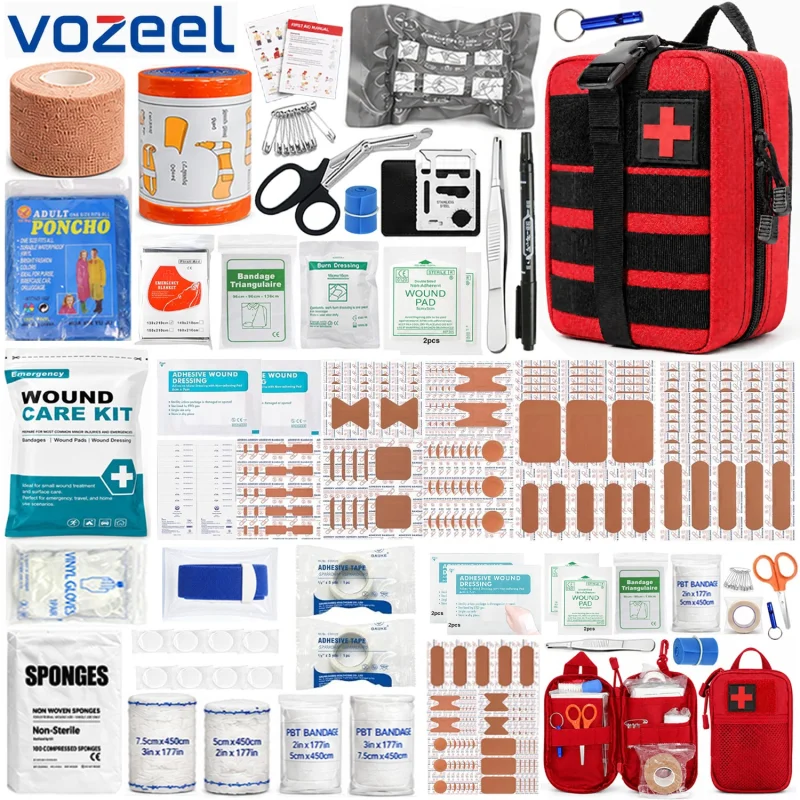
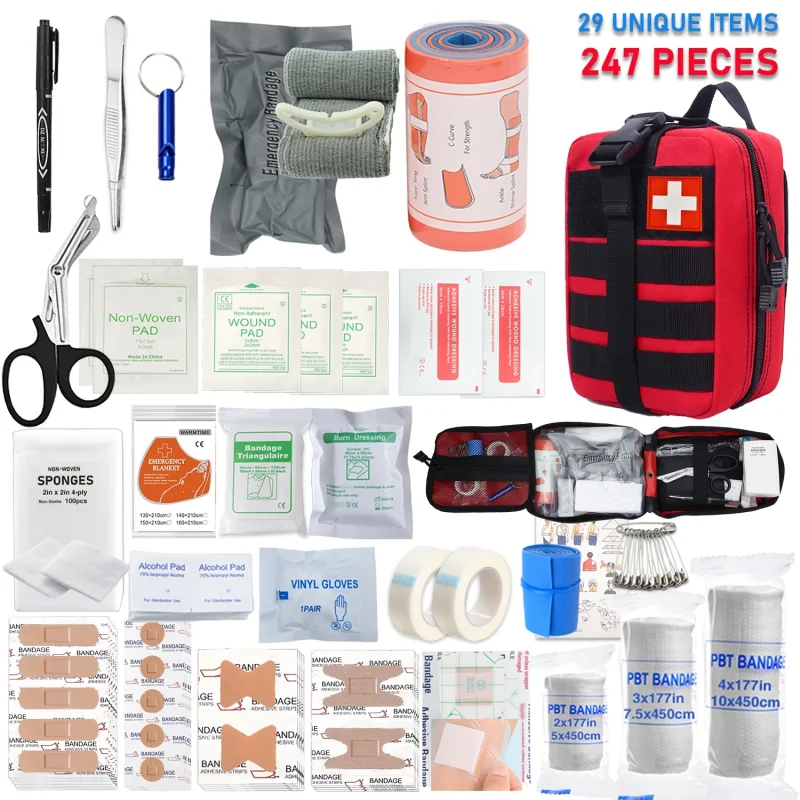
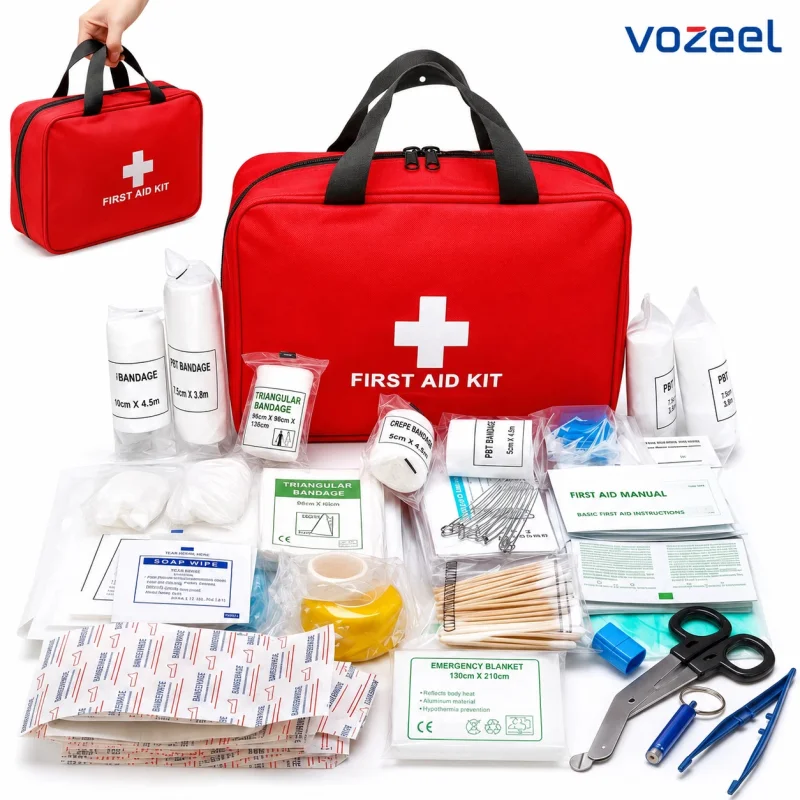
- Nitrile Gloves (1 Pair): Keeps trail dirt out of open flesh and protects against bloodborne pathogens.
- Antiseptic Wipes (Benzalkonium Chloride): Cleans chain grease, dirt, and road grit from minor cuts before dressing.
- Sterile Gauze Pads (4x4 inch): Controls bleeding from blunt impacts and gouges.
- Non-Adherent Sterile Dressings (3x4 inch): Keeps dressings from tearing away fresh scab tissue on raw lacerations.
- Coban Elastic Wrap (2-inch width): Self-adhering wrap that holds dressings under firm compression without pins or tape.
- Sterile Butterfly Closures / Steri-Strips: Pulls gaping wound edges together over high-flexion joints like knees and elbows.
- Flexible Fabric Bandages: Covers minor knuckle cuts from trail brush or chain slips.
- Stainless Steel Tweezers: Pulls embedded gravel, thorns, or glass out of raw tissue.
- OTC Pain Relief & Antihistamines: Ibuprofen mitigates blunt force swelling; Diphenhydramine handles sudden wasp or bee stings.
This lean configuration manages 90% of suburban road mishaps without adding dead weight on climbs.
Off-Road and Bikepacking Medical Kit Expansions
Cell service vanishes three miles into a mountain gorge. Emergency response times jump from fifteen minutes to six hours. Off-road riding brings high-speed blunt impacts, branch punctures, and jagged rock lacerations. Your bikepacking medical kit requires dedicated trauma gear that goes well beyond adhesive bandages.
When building an off road cycling first aid kit, step up to a modular 1L or 1.5L roll-top dry bag. Integrate these heavy-duty items into your core cycling emergency kit:
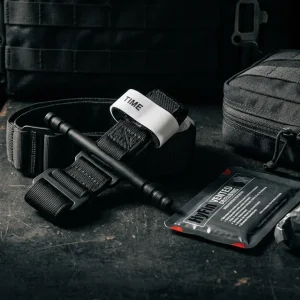
Arterial Bleeding Control: High-speed crashes on gravel or singletrack can drive chainrings or broken carbon directly into arteries. Pack a CoTCCC-approved windlass tourniquet (such as a CAT Gen 7 or SOFTT-W). Practice one-handed application ahead of time. Keep it in an easily accessible top-tube bag—never bury it under a bivvy sack.
Hemostatic Gauze: QuikClot or Celox gauze accelerates clotting in junctional areas where tourniquets fail, like the groin or armpit.
Pressure Bandage: An Israeli Bandage or 4-inch modular trauma dressing applies severe focal compression to deep wounds, freeing up your hands.
Trauma Shears: Compact 5.5-inch shears slices through tough Cordura bib shorts, thermal tights, and winter gloves to expose wounds immediately.
Wound Irrigation: A 30ml syringe or dedicated bottle nozzle lets you blast high-volume clean water deep into grit-clogged wounds before dressing.
Splinting & Support: Slide a flat, folded 36-inch SAM Splint along the back panel of your hydration pack. It stabilizes fractured wrists, collarbones, or ankles long enough to reach an evacuation point.
Blister & Friction Care: Hydrocolloid dressings and Leukotape P. Stiff carbon soles during long hike-a-bike sections ruin trips fast if you ignore hot spots.
Road Rash Care: Protocol for Friction Abrasions
Road rash burns intensely, looks graphic, and infects rapidly if neglected. Sliding across tarmac drives street grime, micro-plastics, and oils into open tissue. Immediate field treatment prevents deep infection and speeds up skin recovery.
Execute this protocol as soon as you stop moving:
1. Stop the Bleeding: Apply direct pressure using sterile gauze. Friction burns bleed in a broad, steady weep. Two minutes of continuous pressure halts capillary bleeding.
2. Debride and Flush: This hurts, but skipping it invites infection. Blast the wound thoroughly with clean drinking water or saline. Use a soft sterile pad or wipe to remove loose gravel and grit. Avoid harsh alcohol swabs—they destroy living tissue and stall healing.
3. Apply Barrier Ointment: Spread a thin layer of antibiotic ointment or petroleum jelly over the raw patch. Keeping the wound moist prevents dressings from sticking and minimizes scarring.
4. Cover with Non-Adherent Dressing: Place a non-adherent pad (or hydrocolloid dressing) directly over the raw area. Secure it with Coban self-adherent wrap or elastic netting. Never apply sticky medical tape to torn skin surrounding the wound.
Swap dressings every 24 hours—or immediately if fluid or trail dirt saturates the pad.
Critical Red Lines: When to Call EMS
A compact bikepacking first aid kit handles minor to moderate trail trauma. It cannot fix major structural damage. Recognize where field care ends and emergency medical service begins.
Trigger your satellite messenger SOS or dial emergency services immediately if you spot any of these indicators:
Uncontrolled Bleeding: Bright red blood spurting or pooling rapidly despite hard, direct pressure. Apply a tourniquet high and tight on the affected limb right away.
Head Trauma and Concussion: Any loss of consciousness, even for a split second. Watch for slurred speech, unequal pupils, confusion, vomiting, or cracks in the helmet shell. Structural helmet damage signals head impact—never let a concussed rider roll solo.
Spinal Warning Signs: Numbness, tingling, or loss of sensation in fingers or toes post-crash. Severe neck or spinal pain. Keep the rider completely still unless external threats (like oncoming traffic) demand immediate movement.
Compromised Respiration: Shortness of breath, uneven chest expansion, or sharp pain on inhalation. These symptoms indicate fractured ribs or a collapsed lung.
Deformed Extremities: Visible bone ends, or limbs bent at unnatural angles with no pulse detectable at the wrist or ankle.
What is the single most important item in a cycling first aid kit?
Near civilization, a fully charged smartphone in a waterproof case is your single most effective tool. It connects you directly with emergency dispatch to share precise GPS coordinates. Beyond cell coverage, a satellite communicator (like a Garmin InReach or ZOLEO) takes over that critical role.
Can I use standard home medical supplies for my bicycle medical kit?
Yes, provided you repackage them for weather protection and compact storage. Standard household band-aids and loose gauze rot quickly under saddlebag moisture and frame vibration. Choose vacuum-sealed dressings, self-adhering compression wraps, and heavy-duty fabric strips stored inside a tough zip-top or roll-top dry bag.
How often should I inspect and refresh my bikepacking first aid kit?
Inspect your medical setup twice a year and prior to every multi-day tour. Check expiration dates on ointments, meds, and wipes. Check sterile packaging for pinhole tears caused by saddlebag friction; breached packaging ruins sterility.