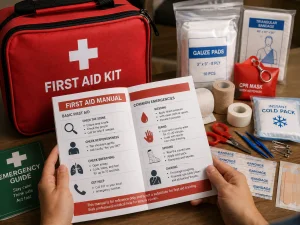
In an era where smartphones function as pocket supercomputers, pulling a printed paper guide out of a trauma kit can look like a relic from another decade.
The standard pushback is entirely predictable:
“Why waste pocket space? I can just search Google or YouTube.”
That assumption works flawlessly—right until it collapses.
Emergencies rarely happen in controlled environments. They hit when phone batteries sit at 1%, cell service cuts out, or you stand inside a reinforced concrete basement or remote canyon far beyond the reach of any signal tower.
Streaming a tutorial video is suddenly off the table.
That single point of technological failure explains why a physical first aid kit instruction manual belongs in every properly equipped trauma bag.
It requires zero battery life.
It operates flawlessly in complete dead zones.
And it will never halt a high-stress emergency response with a surprise firmware update or a sudden black screen.
Smartphones Are Brilliant—Until Tech Fails
Searching the web works smoothly during calm moments.
The core issue is that medical crises never respect your schedule.
You might be miles down a backcountry trail, working an off-grid construction site, navigating a citywide power outage, or staring at a shattered screen after dropping your phone onto concrete.
This stark reality shows why first aid kits include instructions alongside shears, tourniquets, and pressure dressings.
A printed field manual provides an immediate analog backup wired straight into your kit.
Low-tech?
Without question.
Indispensable when screens fail?
Absolutely.
Adrenaline Wipes Working Memory
Reviewing first aid procedures over coffee is simple. Applying those steps while someone bleeds in front of you triggers a completely different psychological state.
Under acute stress, adrenaline induces auditory exclusion, loss of fine motor skills, and sudden mental paralysis. Your brain freezes under pressure:
“What do I do first?”
A high-contrast emergency first aid guide cuts straight through that cognitive logjam.
Instead of fumbling with touchscreens, typing queries with shaking hands, and fighting through ad-cluttered search pages, you open a clear paper sheet engineered for rapid triage.
No browser tabs.
No loading icons.
No algorithmic noise.
Just clear, sequential directions sitting directly on top of your supplies.
Shared Kits Require a Universal Standard
A medical kit stored in a household, fleet vehicle, job site, or campsite will inevitably be accessed by individuals with wildly different training backgrounds.
You might know the exact location and function of every chest seal and pressure bandage.
A coworker or bystander stepping in during a crisis might have zero medical experience.
A concise first aid kit manual establishes a clear operating baseline for anyone who opens the bag.
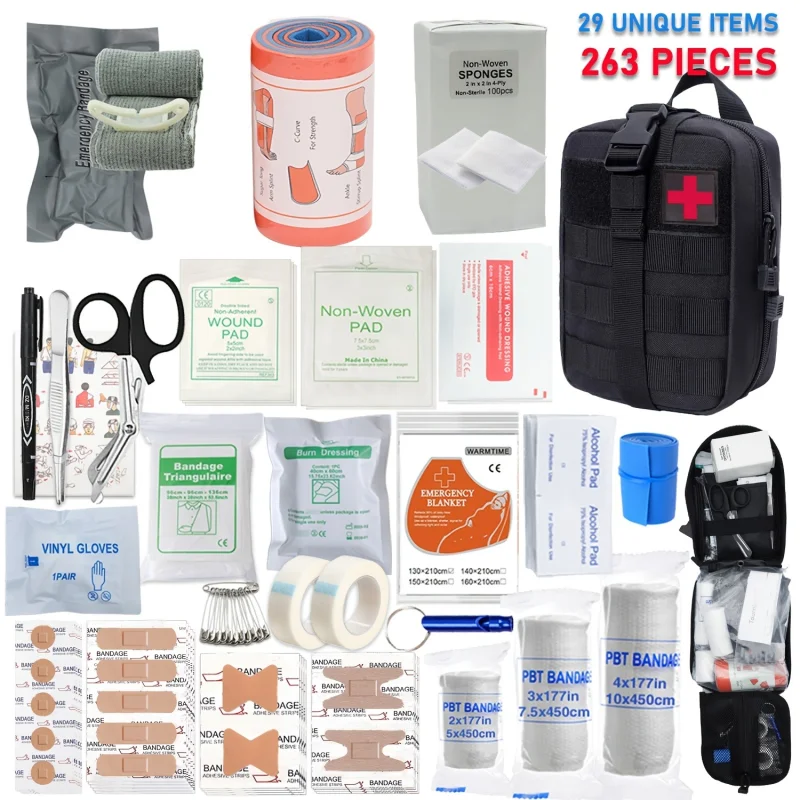
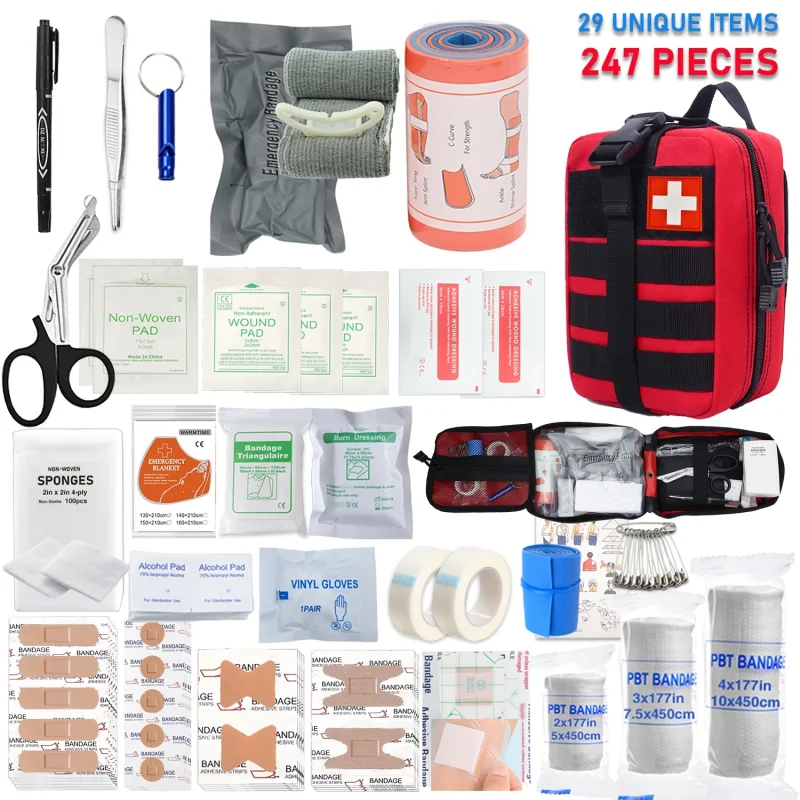
This layout is vital for large multi-piece response setups. Extensive 379-piece or 399-piece trauma kits contain specialized items—triangular bandages, burn sheets, splints, and diagnostic tools.
A clear reference sheet strips away ambiguity, enabling anyone to locate and apply supplies without hesitation.
It serves as the stadiest presence in the room, guiding clear action when panic takes over.
Zero Latency, Zero Connectivity Requirements
The definitive edge of first aid instructions without internet comes down to absolute physical reliability.
Paper exists completely outside the digital ecosystem.
No Wi-Fi credentials to track down.
No dropped carrier bands.
No sign-in screens or paywalls.
No software crashes.
Flip the page. Identify the injury. Apply the protocol.
Physical paper retains one supreme advantage no modern device can match: it works indefinitely without power.
An Immediate Inventory and Layout Guide
A first aid manual in emergency kit storage proves its worth long before a medical call occurs.
It acts as an inventory matrix during routine equipment audits and safety inspections.
A well-structured manual details:
- Clear item lists for organized supply tracking
- Basic treatment protocols for acute traumatic injuries
- High-visibility diagrams for physical step-by-step actions
- Explicit warning signs that demand immediate EMS escalation
- Systematic disaster preparedness guides
In large trauma bags, this converts an intimidating collection of 300 clinical items into a structured, functional system.
Positioning: Stop Burying the Manual
A quick-reference sheet offers zero value if buried under pounds of rolled gauze and trauma shears.
Store your first aid kit instruction manual where it hits the eye immediately upon opening the zipper:
- Inside a clear vinyl pocket right beneath the primary flap
- Secured within an upper lid document sleeve
- Tucked into an outer high-visibility mesh pocket
- Stashed in a dedicated sleeve marked with clear medical iconography
A responder should never dig through layers of bandages just to read directions. Emergency response runs on seconds, not minutes spent tearing through nylon compartments.
Weatherproofing Your Field Documentation
If your kit lives in a marine vessel, work truck, trail pack, or unheated garage, ambient moisture and humidity will eventually break down standard paper.
Protect your printed materials before field exposure causes damage.
Keep the guide sealed inside a heavy-duty ziplock sleeve or opt for a fully laminated quick-reference card. This shields the text against rain, damp environments, spilled saline, or blood on hands during handling.
A soggy mass of ruined paper helps no one in a crisis.
If your documentation tears, stains, or fades over time, swap it out immediately.
Field Manuals Support Training—They Do Not Replace It
Printed references are rapid field guides, not a replacement for certified First Aid Training.
Practical training builds muscle memory, scene evaluation habits, hands-on technique precision, and the mental composure needed to handle major trauma.
The manual provides a quick refresher.
Training builds the readiness to execute.
For life-threatening conditions, massive arterial bleeding, blocked airways, or severe chest injuries, always contact emergency medical services immediately while initiating care.
The Bottom Line
Why keep physical paper inside a high-tech medical kit in a digital world?
Because digital tools fail precisely when field conditions turn harsh.
A dedicated first aid kit instruction manual delivers simple, unyielding performance features:
- Complete independence from power grids and batteries
- Flawless operation inside signal dead zones
- Permanent storage directly alongside the physical gear
- Instant usability for any bystander who opens the kit
- Rapid supply identification under chaos
That manual might sit untouched for months or years.
But when power grids fail, cellular networks crash, and panic sets in, that silent piece of paper works without fail.
No power cord required.
FAQ
Q1: Why do medical kits still include printed instructions?
Printed guides provide guaranteed, offline access to critical care steps when smartphones suffer dead batteries, damaged screens, or signal loss. This reliability is why first aid kits include instructions in physical formats.
Q2: Can a printed manual replace certified medical training?
No. A first aid kit instruction manual functions as a fast field reference, but it cannot replace practical hands-on First Aid Training, stress exposure, or professional medical care.
Q3: Where should the manual be stored inside the kit?
Store your first aid manual in emergency kit sleeves located at the primary opening point, such as a transparent lid pocket or top mesh section, keeping it dry and instantly visible.
Q4: Do I still need a paper manual if I have offline first aid apps?
Yes. Phones shatter, overheat, drain batteries, or prove impossible to use with wet or gloved hands. Physical first aid instructions without internet dependencies guarantee you retain an instantly accessible backup guide at all times.