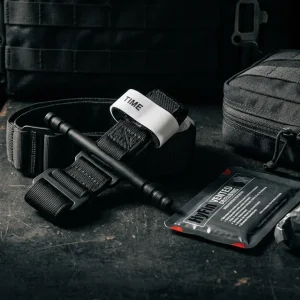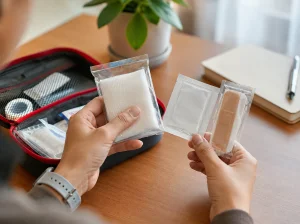
Open any standard first aid kit and a clear pattern immediately emerges.
Bandages sit in sealed paper sleeves. Gauze pads rest inside sterile pouches. Antiseptic wipes are sealed in foil packets. Trauma dressings feature double-walled protection.
To the untrained eye, this looks like redundant waste.
So why are first aid supplies individually wrapped rather than stored loose like household items?
Every single-unit wrapper acts as a self-contained protective barrier. It guarantees an item stays sterile, clean, and effective until the precise second it touches a wound.
This isn't about marketing or presentation. It is functional medical engineering.
Pulling One Item Without Compromising the Rest
First aid kits endure demanding, volatile environments.
Glove compartments. Active job sites. Tactical packs. Kitchen drawers. Marine lockers.
In these spaces, medical gear faces relentless exposure to grit, moisture, physical friction, and dirty hands reaching in during an emergency.
With individually packaged first aid supplies, retrieving a single bandage leaves every other component completely protected.
You grab one bandage with soiled hands on a job site.
The remaining stock stays sterile, dry, and ready for future use.
Unit-level packaging halts cross-contamination entirely. Accessing one item never puts the rest of your stock at risk.
Why Gauze Requires Individual Unit Seals
It is common to ask why gauze is individually wrapped when it appears to be simple woven cotton.
Medical gauze is engineered for extreme absorbency. Exposed to ambient air, it instantly pulls in airborne humidity, ambient dust, skin oils, and microbial contaminants.
If ten pads sat loose in a single pouch, grabbing the first pad immediately contaminates the other nine.
Individual wrappers isolate every pad entirely.
Open one pad.
Apply it directly to the wound.
The remaining inventory stays untouched inside a factory-sealed environment.
For sterile-labeled items, manufacturer packaging provides your only verified guarantee of safety. The moment a factory seal breaks, sterility drops to zero.
Shielding Gear From Environmental Breakdown
High-spec first aid supply packaging serves as a tough physical barrier against physical wear and environmental degradation.
Depending on the barrier substrate, unit packaging guards medical equipment against:
- Airborne grit, sawdust, and environmental particulates
- Ambient humidity, heavy rain, and perspiration
- Skin oils and transferred pathogens
- Accidental leaks from internal liquid antiseptics
- Friction and puncture risks from loose tools
This layer is vital for vehicle and field kits subjected to thermal fluctuations and violent movement.
However, paper sleeves are not waterproof armor.
If a wrapper tears, gets soaked, or suffers punctures, treat the contents as contaminated and replace the item immediately.
Wiping grime off a compromised wrapper does not restore a sterile barrier.
Unit Packaging as Critical Data Labels
The utility of sealed first aid supplies extends well beyond contamination defense.
Primary packaging displays key operational details, including:
- Product identification and material specifications
- Dimensions, ply count, and absorbency rating
- Expiration dates and lot tracking numbers
- Sterilization protocol (EO gas or Gamma irradiation)
- Deployment steps and safety warnings
Strip away the packaging, and a pile of specialized dressings suddenly looks identical.
In emergency scenarios, confusion consumes critical time.
When timing matters, high-contrast packaging confirms the item type, size, and sterile status instantly.
Streamlining Kit Audits and Inventory Management
Maintaining readiness demands regular kit inspections. First aid kit packaging simplifies inventory audits.
With primary unit packaging intact, inspectors can quickly determine:
- Which items were consumed and require restocking
- Which supplies have surpassed their expiration dates
- Which wrappers show moisture intrusion or physical tears
- Which gear remains fully operational
Visual inspections take seconds when items are cleanly sealed and marked.
This removes ambiguity, allowing you to pack supplies into modular pouches or elastic loops while maintaining exact oversight.
Why Wipes Require Airtight Foil Enclosures
Alcohol pads, iodine swabs, and antiseptic wipes rely on active liquid formulations.
These compounds use volatile solvents that evaporate rapidly upon atmospheric exposure.
Foil-laminated packets create a vapor barrier that locks in active fluids.
Without an impermeable barrier, an alcohol pad degrades into a dry cloth within days.
Single-unit foil packaging guarantees maximum fluid saturation and chemical potency when opened in the field.
Bulk Outer Packaging vs. Unit Wrappers
When assembling gear, distinguish between bulk transit packaging and primary unit protection.
The core design principle is straightforward: “Why are these supplies individually packaged?”
Kit builders often follow up with: “Can I strip packaging to reduce bulk?”
For an in-depth breakdown of packing efficiency, read our complete guide: Should You Remove First Aid Supplies From Their Original Packaging?
The short rule: discard heavy outer cardboard boxes to cut bulk, but leave primary wrappers on gauze, dressings, and wipes intact.
The outer box merely handles transport shock.
The inner wrapper acts as an active layer of medical protection.
Key Takeaways
Why are first aid supplies individually wrapped?
Because that thin layer of polymer, paper, or foil performs essential functions simultaneously:
- Isolates clean inventory from contaminants and fluids
- Preserves factory sterility up to the moment of application
- Displays critical dimensions, lot codes, and expiration dates
- Prevents liquid antiseptics from evaporating
- Enables fast, accurate kit inspections
That wrapper isn't excess packaging.
It is an engineered sterile shield designed to protect medical gear until deployment.
Keep it sealed until you need it.
Frequently Asked Questions
Q1: Why are adhesive bandages individually wrapped?
Wrapper sleeves protect the sterile pad and adhesive mass from dust, ambient humidity, and premature handling. They also store dimensional data and maintain adhesive performance over time.
Q2: Why is sterile gauze individually wrapped?
Sterile gauze requires isolation from airborne microbes, dust, and moisture. The unit wrapper maintains a verified sterile barrier from the factory to patient care.
Q3: Why are expiration dates printed on unit packaging?
Adhesives degrade, antiseptics evaporate, and physical barriers age. Printing expiration dates directly on primary wrappers guarantees reliable inventory tracking even when outer cartons are discarded.
Q4: Can I remove individual wrappers to make my first aid kit smaller?
Never strip primary wrappers from sterile dressings, gauze, or wet wipes. Removing them compromises sterility and ruins active wipes. To optimize kit volume, discard outer cardboard boxes while keeping unit-wrapped items sealed.