Before a camping trip, most people carefully pack the tent, sleeping bags, stove, coffee, and snacks. But the first aid kit? Yeah, that often gets tossed in at the last minute with a quick, “Well, we have one, so we’re good… right?”
But let’s be real. When someone gets scratched by a branch, burned by a hot pan, attacked by mosquitoes, or comes back from a hike with painful blisters, a reliable camping first aid kit suddenly becomes a lot more important. It is not just another item in your gear pile. It is the quiet little safety buddy that shows up exactly when you need it.
So, what makes the best camping first aid kit? It is not always about having the biggest kit or the most supplies. A good kit should actually fit outdoor use, be easy to carry, and help you find what you need without turning the whole thing into a mini treasure hunt.
1. Clear and Organized Storage
A good camping first aid kit should have compartments, mesh pockets, or elastic loops to keep items in place. Bandages, gauze, scissors, antiseptic wipes, and tape should each have their own spot.
In an emergency, nobody wants to play “first aid mystery box” while searching for one bandage at the bottom of the pouch.
2. Easy to Carry
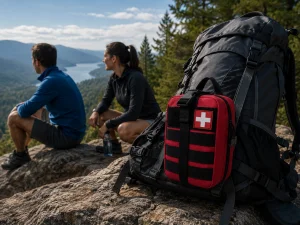
Camping gear can already feel like a full-time job to pack. Your first aid kit should be lightweight, portable, and easy to grab.
Look for a kit with a handle, compact shape, or travel-friendly design. It should fit in your car, backpack, tent area, or camping storage bin without becoming a tiny suitcase no one wants to carry.
3. Durable Outer Material
Outdoor conditions can be rough. Dust, moisture, pressure, and friction are all part of the camping experience.
That is why a good outdoor first aid kit should have a tough outer shell, strong stitching, and a smooth, reliable zipper. Because honestly, a stuck zipper during an emergency is the kind of drama nobody needs.
4. Water-Resistant or Waterproof Protection
Rain, wet grass, lake camping, and humid weather can all expose your supplies to moisture.
One of the most useful outdoor first aid kit features is water resistance. A waterproof or water-resistant pouch helps protect gauze, bandages, wipes, and other supplies so they do not get damaged before they even get a chance to help.
5. Practical Supplies for Common Camping Injuries
A good camping emergency kit should cover the small but common problems that happen outdoors.
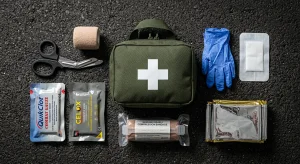
Useful supplies may include:
- Adhesive bandages
- Gauze pads
- Medical tape
- Antiseptic wipes
- Disposable gloves
- Scissors
- Tweezers
- Instant cold pack
- Burn care supplies
- Anti-itch treatment
- Elastic bandage wrap
Camping is not a hospital, but your kit should still be ready for basic cuts, scrapes, burns, bites, blisters, and sprains.
6. The Right Size for Your Group and Trip
A solo weekend camper and a family of four on a multi-day trip do not need the same kit.
The more people you bring and the longer you stay outdoors, the more supplies you should have. A compact first aid kit may be enough for a short solo trip, while a larger camping first aid kit is better for families, groups, RV camping, or longer outdoor adventures.
7. Easy to Refill
A first aid kit is not a magical “buy once and never touch again” box. Supplies get used. Some items expire. Packaging can get damaged.
A good kit should be easy to check, refill, and maintain. Before each camping season or major trip, take a quick look inside. Replace used items, expired supplies, or anything with damaged packaging.
Final Thoughts
A good camping first aid kit is not just about looking full. It should be easy to organize, easy to carry, durable, practical, and ready when you need it.
Most of the time, your first aid kit will sit quietly in your gear bag, car, or tent. But when something happens, it should be ready to show up like the dependable safety buddy it is.
A little preparation can make your camping trip feel a lot more relaxed, and honestly, that peace of mind is worth packing.