Warehouse work moves fast. Boxes need moving, labels need printing, orders need packing, and somebody is always trying to clear the next pallet before lunch.
Most days, the routine feels familiar. But cardboard edges, box cutters, packing straps, shrink wrap, and shelf corners all have a funny habit of showing up at exactly the wrong moment.
A paper-cut-style box scrape. A box cutter that gets a little too close. A small bump against a shelf. A minor twist after lifting or reaching. None of these are usually big emergencies, but they always seem to happen when everyone is already busy.
That is why a warehouse first aid kit should be easy to find and ready to use. It is not there to turn the warehouse into a clinic. It is there so employees can handle everyday small injuries without stopping everything to ask, “Does anyone know where the bandages went?”
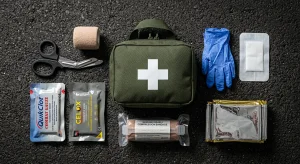
Useful workplace first aid supplies can include adhesive bandages, gauze pads, medical tape, antiseptic wipes, alcohol pads, disposable gloves, scissors, tweezers, elastic bandages, cold packs, and burn dressings. In a warehouse, bandages, wipes, gauze, and gloves are basically the reliable regulars. They may sit quietly most of the day, but when a small cut or scrape shows up, they are usually first on the job.
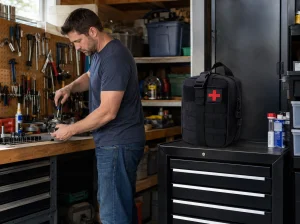
Where the kit is stored matters too. Try not to lock it in a manager’s desk drawer or keep it all the way across the building. Nobody wants to walk through half the warehouse with a scraped hand just to find a wipe and a bandage. A better setup is to place kits near receiving areas, packing stations, main warehouse aisles, break rooms, or other easy-to-reach locations.
For larger spaces or teams working in separate zones, a larger industrial first aid kit can make more sense. It can also help to keep multiple kits in different areas. One near receiving, one near packing, and one somewhere employees pass often. That way, people do not have to rely on one kit being in the right place at the right time.
Like any workplace supply, the kit needs a quick check now and then. Bandages, wipes, gloves, and gauze tend to disappear first. Tape can lose its grip, cold packs can get used, and supplies sometimes walk away without anyone remembering to replace them. A simple warehouse safety supplies checklist helps keep everything ready to go.
Warehouse work is already busy enough. Keeping basic first aid supplies nearby is not about adding another task. It is about helping employees deal with small problems quickly and get back to work with less hassle.
FAQ
1.What should be in a warehouse first aid kit?
A warehouse first aid kit should include adhesive bandages, gauze pads, medical tape, antiseptic wipes, alcohol pads, disposable gloves, scissors, tweezers, elastic bandages, cold packs, and burn dressings for common minor workplace injuries.
2.Where should first aid kits be placed in a warehouse?
Keep them in visible, easy-to-reach places such as receiving areas, packing stations, break rooms, aisle entrances, or supervisor areas. Avoid keeping them locked away or hidden in an office.
3.How many first aid kits does a large warehouse need?
Large warehouses with separate work zones or more employees should consider using multiple kits. Keeping kits near receiving, packing, storage aisles, and break areas can make them easier to access.
4.What first aid supplies get used up most often in warehouses?
Adhesive bandages, antiseptic wipes, alcohol pads, gauze pads, disposable gloves, and medical tape are usually used most often. They should be checked and restocked regularly.
5.How often should a warehouse first aid kit be checked?
A quick monthly check is helpful, with a more complete restock every three to six months. High-traffic work areas may need more frequent checks.
6.Is a large-capacity first aid kit better for a warehouse?
It can be. A larger industrial first aid kit is useful for bigger teams, larger work areas, or multiple work zones. Many workplaces also benefit from buying several kits and placing them in different locations.