Trailside Triage: Engineering a Functional MTB First Aid Kit
Going over the bars isn't a possibility; it's an inevitability. High pedal speeds translate to bone-crushing impact in milliseconds when front wheels hit granite or buried roots. Fifteen miles deep into backcountry singletrack, a sudden crash shifts your priority from chasing trail flow to managing medical crisis.
Off-the-shelf first aid kits rely on flimsy plastic strips and safety pins designed for workplace compliance like ANSI Z308.1. They fall apart against arterial bleeding from sharp brake rotors or high-velocity blunt trauma. A reliable mtb first aid kit requires a two-tiered strategy: baseline wound management and critical trauma control.
Tier 1: Wound Care and Trailside Maintenance
Low-speed laydowns produce road rash, deep lacerations, and joint sprains. They might not kill you, but untreated trail grime guarantees infection before you reach the parking lot.
Standard adhesive bandages peel off sweaty skin immediately. You need specialized dressings engineered to hold under physical exertion.
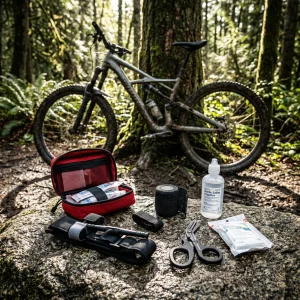
- Sterile Saline or Irrigation Syringe (60cc): Mud ground into an open wound breeds bacteria fast. High-volume pressure flushing beats rubbing alcohol every single time.
- Benzoin Tincture and Steri-Strips: Deep skin tears need physical closure. Benzoin acts as a skin-tackifying agent, forcing closure strips to adhere to sweaty, dirty tissue.
- Cohesive Elastic Wraps (Coban): Secures dressings over moving joints without cutting off distal circulation or relying on useless adhesive.
- Hydrocolloid Dressing Pads: Friction burns require a moist environment to heal cleanly and prevent thick, restrictive scar tissue from locking up joints.
- NSAIDs and Antihistamines: Targeted pharmaceuticals. Ibuprofen controls acute joint inflammation; diphenhydramine mitigates sudden allergic reactions from hidden wasp nests.
Tier 2: High-Velocity Trauma Control ("Don't Die" Kit)
A handlebar punch to the groin or a full-speed stop against a tree trunk changes the stakes entirely. A severed femoral artery leads to fatal blood loss in under three minutes. Deep in the woods, definitive medical care is hours away. This tier forms your dedicated mountain bike emergency kit for life-threatening injuries.
Carrying specialized trauma gear without knowing how to use it is useless. Pair this hardware with a certified wilderness first aid mtb course before heading out.
Life-saving trauma components include:
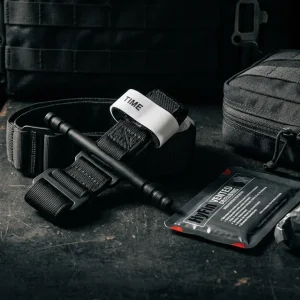
- CoTCCC-Approved Tourniquet (CAT Gen 7 or SOFTT-W): Improvised t-shirt ties fail under real arterial pressure. Stick to genuine, proven tourniquets. Keep it unbagged, pre-staged, and accessible within seconds.
- Hemostatic Gauze (QuikClot or Celox): Standard dressings cannot stop deep junctional hemorrhaging in groin or armpit folds where a tourniquet cannot clamp down. Hemostatic agents chemically accelerate clotting on contact.
- 6-Inch Israeli Pressure Bandage: Integrates a thick pad, pressure applicator bar, and securing clip into a single self-tensile dressing.
- Vented Chest Seals (Twin Pack): Broken ribs puncturing lung tissue cause tension pneumothorax. Vented seals dump trapped air and blood without letting ambient pressure collapse the lung cavity.
- Nitrile Gloves (2 Pair): High-visibility blue or orange. Dark gloves obscure pooling blood during physical trauma sweeps in low light.
Logistics: Weight, Staging, and Pack Placement
Weight impacts climbs. Bulky medical bags usually get left behind in the truck. Compact, logical organization keeps critical crisis management equipment for cyclists on your person when it counts.
Match your gear to the terrain. For quick laps near the trailhead, strap severe trauma tools directly to your frame or waist pack, leaving heavy wound care supplies in the car. For deep backcountry epics, pack the complete kit inside an IPX7 waterproof dry bag inside your hydration pack.
Heat and vibration ruin medical gear. Vehicle interiors degrade latex, while constant trail movement breaks sterile vacuum seals. Check expiration dates bi-annually and replace damaged packaging right away.
Is a CoTCCC-approved tourniquet necessary for mountain biking?
Yes. High-speed impacts cause open fractures, chainring lacerations, and arterial ruptures. Massive arterial bleeding can cause fatal shock within minutes. A genuine CoTCCC-approved tourniquet like the CAT Gen 7 is the single most reliable tool to stop catastrophic extremity bleeding on the trail.
What is the difference between standard OSHA kits and a wilderness first aid mtb setup?
Standard OSHA kits are built for indoor workplaces with 911 response times under ten minutes. They contain small bandages, burn ointments, and light pads. A wilderness MTB kit accounts for hours of delay before rescue crews arrive, prioritizing arterial hemorrhage control, chest trauma stabilization, and heavy-duty wound dressings that endure sweat and movement.
How often should I audit and replace items in my mtb medical kit?
Audit your supplies every six months. Inspect vacuum-sealed hemostatic gauze and chest seals, as micro-abrasions from pack vibration destroy sterile seals. Heat degrades adhesive strips and elastic wraps over time. Replace expired medications and compromised packaging immediately.