The Ten Essentials: Field-Tested Systems for Backcountry Survival
In 1930, The Mountaineers—a Seattle climbing organization—compiled a checklist to prevent alpine explorers from dying of exposure during unexpected bivouacs in the Pacific Northwest. Nearly a century later, Search and Rescue (SAR) teams regularly extract ill-prepared day hikers who treated those foundational supplies as optional.
What started as a rigid list of ten items has transformed. Modern wilderness preparedness views these components as ten functional systems. This modular approach allows you to tailor your kit to specific terrain, extreme weather, or fast-and-light day trips without compromising your safety net.
1. Navigation Systems
Phones fail. Sub-zero cold kills lithium batteries in hours, while dense forest canopy breaks satellite lock. A dependable navigation setup builds analog reliability under digital speed.
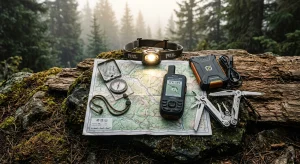
- Topographical Paper Map: Protected in a waterproof case. A 1:24,000 scale map provides the fine detail needed when forced off-route.
- Magnetic Compass: A durable baseplate model with adjustable declination. No circuits, no battery drain—just straightforward physical orientation in zero visibility.
- GPS & Satellite Messenger: Dedicated satellite communicators like a Garmin inReach or ZOLEO enable two-way SOS communication well beyond cellular range.
- Backup Power: A rugged 10,000mAh external battery rated IP67 keeps critical devices powered through heavy rain.
2. Illumination (Headlamps and Flashlights)
A route delay or miscalculated pace can stretch a casual afternoon hike past dusk. Relying on a smartphone light drains your primary distress beacon in under ninety minutes.
Pack a dedicated headlamp generating at least 300 lumens, equipped with a red-light mode to preserve night vision. Store fresh lithium AAA backups alongside it, or verify your rechargeable battery is topped off before heading out. Always engage the physical switch lockout before packing so the light does not burn out silently inside your pack.
3. Sun and Element Protection
UV intensity rises roughly 4% for every 1,000 feet of elevation gained. High-alpine snowfields reflect up to 80% of that radiation, scorching skin and damaging eyes even under overcast skies.
A solid outdoor safety checklist demands complete UV defense:
- Sunglasses: Polarized lenses with 100% UVA/UVB protection—upgrade to Category 3 or 4 optics for snow and alpine terrain.
- Sunscreen: Broad-spectrum SPF 30+ zinc oxide formula. Reapply every two hours during active movement.
- UPF Clothing: Synthetic long-sleeve tops rated UPF 50+, paired with a wide-brim hat to shield your neck and face.
- Lip Balm: High-protection SPF 30 balm to prevent painful windburn and chapping.

4. First Aid and Medical Supplies
A basic drugstore first-aid kit offers little help when facing severe trauma or torn ligaments miles from a trailhead. Assemble your medical kit around wilderness first-responder protocols or ANSI Z308.1 standards, scaled to your group size.
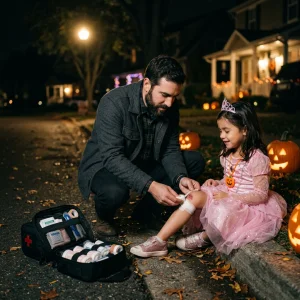
Ditch heavy plastic containers and stow everything inside a tough, waterproof dry bag. Core hiking safety gear for trauma management includes:
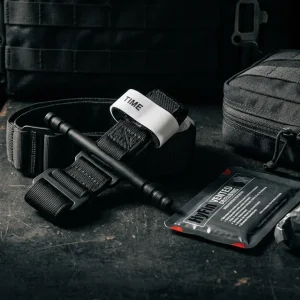
- Trauma Care: A CoTCCC-approved windlass tourniquet (such as a C-A-T Gen 7) and hemostatic gauze (QuikClot or Celox) to control arterial bleeding rapidly.
- Wound Management: Sterile 4x4 gauze pads, self-adherent Coban wrap, medical tape, and antiseptic wipes.
- Blister Defense: Pre-cut Leukotape or moleskin. Apply tape to hot spots at the first sign of friction rather than waiting for skin to tear.
- Medications: Antihistamines, ibuprofen, acetaminophen, and anti-diarrheal tablets.
- Trauma Shears: High-leverage shears capable of cutting through heavy leather boots, denim, or Cordura pack straps.
5. Knives and Field Tools
A robust fixed-blade knife or multi-tool forms the backbone of field utility—whether prepping tinder, repairing a broken snowshoe binding, or fashioning a splint. Opt for full-tang construction with a 3- to 4-inch high-carbon or stainless steel blade.
Combine your blade with a compact repair kit: wrap several yards of heavy-duty duct tape around your trekking poles, and carry 50 feet of 550 paracord, heavy zip ties, and a spare 1-inch backpack buckle.
6. Fire Starters
Hypothermia sets in rapidly when wet gear meets a cold breeze. The ability to build a fire quickly in wet, windy conditions is a core survival requirement.
Carry two redundant ignition sources: a ferrocerium rod that throws 3,000°F sparks even after submersion, and stormproof matches sealed in a dry case. Pair them with commercial quick-spark tinder tabs or cotton balls soaked in petroleum jelly. Damp kindling requires a long-burning flame source to ignite.
7. Emergency Shelter
A twisted ankle can turn a simple afternoon loop into an unexpected overnight bivouac. Direct contact with cold ground drains body heat far faster than air through conduction.
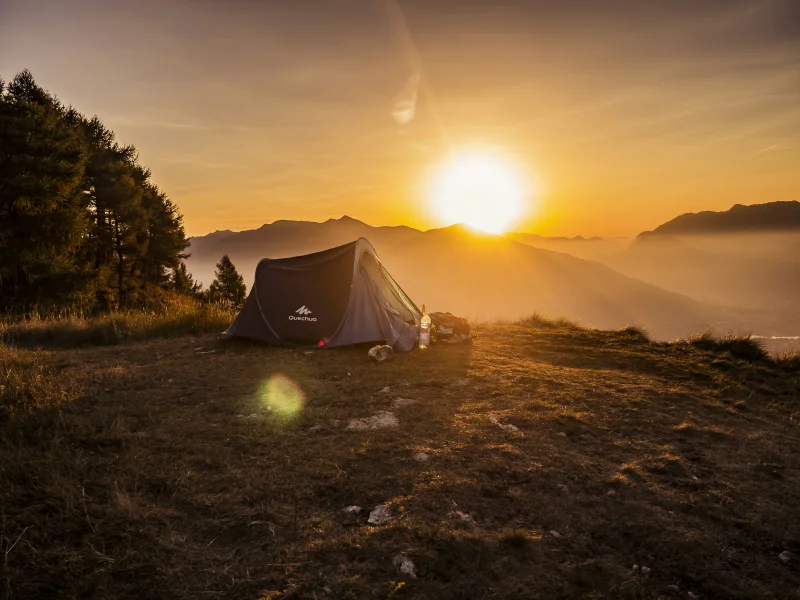
Never head past the trailhead without shelter. Thin Mylar space blankets offer minimal protection; a windproof emergency bivy sack retains radiant heat and blocks freezing drafts. On high-alpine routes, add an ultralight silnylon tarp with reinforced tie-outs.
8. Extra Caloric Supply
Traversing steep or uneven terrain burns 400 to 600 calories an hour depending on pack weight and gradient. If stranded overnight, your body requires fuel to maintain core temperature.
Keep a 24-hour reserve of non-perishable food as a core part of your hiking packing list. Focus on calorie-dense options that require no heating or water addition:
- High-fat energy bars with complex carbohydrates
- Dense nut butter, seeds, and dried fruit blends
- Pemmican or high-protein meat jerky
- Electrolyte replacement packets
9. Water Hydration and Purification
Dehydration rapidly degrades physical performance, impairs judgment, and accelerates hypothermia. Never rely solely on the water carried in your primary reservoir.
Maintain at least two liters of water storage capacity alongside a field-ready purification system. Hollow-fiber membrane microfilters (rated to 0.1 microns) eliminate bacteria and protozoa instantly. Combine mechanical filtration with chemical purification tablets (such as chlorine dioxide) when drawing from sources exposed to agricultural runoff or livestock where viruses may be present.
10. Extra Insulation Layers
Mountain weather changes rapidly. Clear morning skies can yield to freezing rain or sleet by early afternoon.
Avoid cotton completely. It absorbs moisture, forfeits all insulation value when damp, and speeds up heat loss. Build a modular outdoor survival gear layering system using technical synthetics or Merino wool:
- Base Layer: Moisture-wicking long-sleeve top and bottom tights.
- Insulating Mid-Layer: Packable grid-fleece jacket or lightweight synthetic down hoody.
- Outer Shell: Fully seam-taped waterproof and windproof jacket with pit zips to regulate temperature on steep climbs.
Tailoring the Loadout for Field Operations
Carrying the 10 essentials for hiking does not require a 50-pound pack for a quick two-mile walk in a local park. Scale each system's weight and capability to match the actual risks of your trip.
A brief day hike requires a compact setup: headlamp, streamlined IFAK, micro water filter, emergency bivy, and a shell jacket. Deep wilderness expeditions require full redundancy across all ten categories. Treat these systems as a required baseline for outdoor adventure readiness every time you enter the backcountry.
What are the 10 essentials for hiking?
The 10 essentials are a system-based emergency gear checklist: 1) Navigation, 2) Illumination, 3) Sun protection, 4) First aid, 5) Knife and field tools, 6) Fire starters, 7) Emergency shelter, 8) Extra food, 9) Extra water and filtration, and 10) Extra insulating clothing layers.
Why did the Mountaineers update the Ten Essentials list?
The Seattle Mountaineers updated the original 1930s checklist from individual gear items into functional systems to reflect modern gear developments. A systems approach gives outdoor enthusiasts and search-and-rescue teams the flexibility to adjust their kit—selecting between satellite communicators, headlamps, or emergency bivies—based on terrain, weather forecasts, and route length.
What is the most frequently forgotten item on the backcountry essentials checklist?
Emergency shelter and insulation layers are most frequently left behind. Hikers often expect to return long before dark or bad weather arrives, leaving them exposed to hypothermia if delayed by an injury, navigation error, or sudden mountain storm.