When storm season rolls around, most people do a few familiar things: charge their phones, pick up some extra food, fill a few water bottles, and dig out the flashlight to make sure it still works.
That already sounds pretty prepared.
But then the power goes out, the roads start flooding, stores close early, and someone suddenly says, “Wait… where is the first aid kit?”
That is usually when people realize it has been sitting somewhere in the house for months, quietly minding its business and becoming harder to find by the day.
Stormy weather does not always mean a major emergency. Sometimes it is just a scraped hand while moving patio furniture, a small cut from clearing branches, or a slippery front step that catches someone off guard. Normally, those things are easy to deal with. But when the rain is coming down sideways and driving anywhere feels like a bad idea, having basic supplies nearby makes life a lot easier.
A storm emergency kit does not need to turn your living room into a survival show set. The goal is simple: keep the basics together, make them easy to reach, and make sure nobody has to start a full-house scavenger hunt when something small happens.
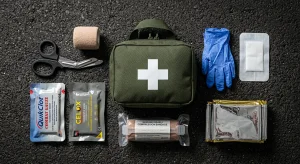
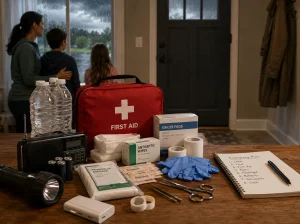
Along with drinking water, shelf-stable food, flashlights, extra batteries, and power banks, your family storm emergency kit should include a reliable first aid kit. Useful basics include adhesive bandages, gauze pads, medical tape, antiseptic wipes, alcohol pads, disposable gloves, scissors, tweezers, elastic bandages, burn dressings, and an emergency blanket.
These are not the most exciting items in the house. They are not exactly fighting for attention next to the snacks or the phone chargers. But when you need them, they tend to become the real MVPs.
Where you keep the kit matters too. Try not to bury it in the far back of the garage under old boxes, holiday decorations, and that one mystery bin nobody has opened in years. That is how a first aid kit turns into something everyone remembers owning but nobody can actually locate.
A hallway closet, kitchen cabinet, living room storage area, or entryway shelf usually works much better. Pick one spot that is easy to reach and easy for everyone in the household to remember.
It is also a good idea to keep a compact first aid kit in the car. Heavy rain, detours, flooded roads, and traffic backups can turn a quick trip into a much longer one. A small kit, plus a flashlight, water, and a power bank, can help you feel a little more prepared when the weather starts rewriting your plans.
Before storm season begins, take a few minutes to check your supplies. Make sure the wipes have not dried out, the tape still sticks, the gloves are not damaged, and anything used earlier has been replaced. Storm preparedness supplies are not much help if they are technically there but cannot do their job.
The point of preparing is not to assume something bad will happen. Weather just likes to make last-minute changes sometimes. A well-stocked severe weather emergency kit gives your family one less thing to worry about when the forecast gets messy.
FAQ
1.What should be in a storm emergency kit?
A storm emergency kit should include basic first aid supplies such as adhesive bandages, gauze pads, medical tape, antiseptic wipes, alcohol pads, disposable gloves, scissors, tweezers, elastic bandages, burn dressings, and an emergency blanket. Keep it practical and easy to use.
2.Where should I keep a family storm emergency kit?
Keep it somewhere easy to reach and easy for everyone in the home to remember, such as a hallway closet, kitchen cabinet, living room storage area, or entryway shelf. Avoid storing it deep in the garage or under piles of boxes.
3.What should I keep nearby during a power outage?
Keep flashlights, extra batteries, power banks, drinking water, shelf-stable food, and important contact information nearby. Having these items in one familiar area can make a power outage much less stressful.4.Should I keep storm emergency supplies in my car?
Yes. A compact first aid kit, flashlight, water, power bank, and basic roadside supplies can be useful during heavy rain, road closures, detours, or long traffic delays.
5.How often should I check my first aid kit?
Check it before storm season begins, then review it every three to six months. Replace anything expired, dried out, damaged, or used.
6.Should I keep a large first aid kit at home and a smaller one in the car?
That is a practical setup. A larger kit can stay at home with more supplies, while a compact kit can stay in the car for travel and unexpected delays. One stays put, one comes along for the ride.