RV travel is all about freedom: take the scenic route, stay an extra night at a campground, cook dinner under the stars, and make the road feel like home.
But once you are miles from town, the nearest pharmacy or urgent care may not be just around the corner. That is where a well-stocked RV first aid kit earns its spot in your storage cabinet. Most of the time, it will sit there quietly. But when someone gets a cut, a minor burn, a bug bite, or a scraped knee, you will be very glad it came along.
Keep Your First Aid Kit Where You Can Actually Reach It
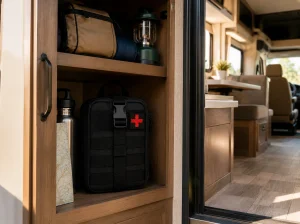
Do not bury your first aid kit behind folding chairs, fishing gear, and five bags of snacks. When someone needs a bandage, nobody wants to turn the whole RV upside down trying to find it.
Keep your main first aid kit near the RV door, kitchen area, or a frequently used storage compartment. It also helps to carry a smaller camper first aid kit in the driver’s area, hiking backpack, or outdoor activity bag.
That way, whether you are setting up camp, cooking outside, hiking with the kids, or stopping for a quick roadside break, your supplies are close by. Less searching, less stress, more getting back to the fun.
Common RV and Campground Mishaps to Prepare For
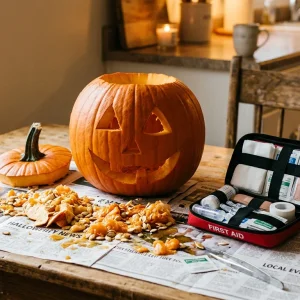
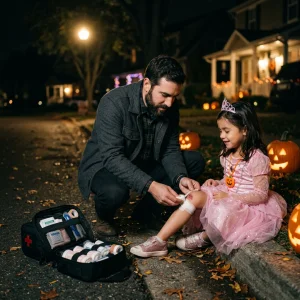
The little accidents on an RV trip are usually pretty predictable. Someone nicks a finger while chopping vegetables. A hand gets too close to the grill. A kid trips over a camping chair. A branch leaves a scratch during a hike.
None of these situations have to ruin the day, but they are much easier to handle when your RV emergency supplies are organized and ready to use.
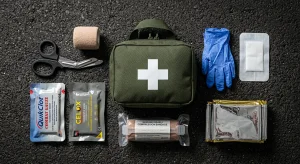
Start with the basics: adhesive bandages, gauze pads, antiseptic wipes, medical tape, tweezers, scissors, and disposable gloves. For longer trips and outdoor activities, add elastic bandages, instant cold packs, burn dressings, blister pads, insect-bite relief, and bleeding-control supplies.
It does not need to be complicated. The key is keeping everything easy to find. Because looking for gauze in the dark with only a phone flashlight is not exactly the camping moment anyone dreams about.
Why a Larger First Aid Kit Makes Sense for Families
Traveling with family means more people, more activities, and honestly, more chances for somebody to need a little help. Between the RV kitchen, campfires, hiking trails, lake days, pets, and kids running around the campground, a small basic kit can run out fast.
A larger family camping safety kit gives you more coverage for multiple people and longer trips away from home. Instead of tossing a few random supplies into a zip bag before every trip, you have one organized kit ready for the road.
Before heading out, take a quick look inside. Are the bandages still dry? Have any supplies expired? Did you replace anything used on the last trip? A two-minute check before leaving can save you a lot of frustration later.
At the end of the day, a reliable road trip first aid kit is not about expecting something to go wrong. It is about being ready, so a small mishap stays small and everyone can get back to enjoying the trip.
FAQ
1.How many first aid kits should I keep in my RV?
It is smart to keep at least two: one larger first aid kit inside the RV and one compact kit in the driver’s area, backpack, or outdoor activity bag.
2. What makes an RV first aid kit different from a home kit?
An RV kit should cover longer travel, outdoor activities, limited access to stores, and common camping situations such as burns, bug bites, blisters, and minor cuts.
3. How often should I check my RV first aid kit?
Check it before every long trip and do a full review at least every six months. Replace expired, damaged, wet, or used supplies.
4. Will a large first aid kit take up too much room in an RV?
Not really. It can fit in a storage cabinet, under a seat, or near the kitchen area. A little storage space is worth the peace of mind.