Restaurant rushes do not usually ease their way in.
Once lunch or dinner service starts, the kitchen is chopping, plating, carrying hot pans, and checking tickets. The front-of-house team is seating guests, running food, clearing tables, and trying to remember which table asked for extra napkins. Everybody is basically running on the restaurant version of fast-forward.
That is also when cardboard edges, hot plate rims, wet floors, delivery boxes, and rolling carts sometimes decide to make an appearance.
Most of the time, it is not a huge situation. Maybe someone gets a small cut while opening packaging. Maybe a hand gets bumped while moving supplies. Maybe a hot edge catches someone by surprise, or a long shift leaves a heel feeling like it has opinions.
The real problem is often not the small mishap itself. It is hearing someone ask, “Does anyone know where the first aid kit went?”
A restaurant first aid kit does not need to make your restaurant feel like a clinic. Its job is simple: keep basic supplies together and easy to find when employees need them. No digging through office drawers during a rush. No asking the entire kitchen who last saw the bandages.
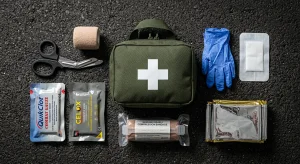
A practical kitchen first aid kit can include adhesive bandages, gauze pads, cleansing wipes, medical tape, disposable gloves, scissors, tweezers, elastic bandages, cold packs, and basic burn dressings. These supplies are usually the quietest members of the restaurant team. They do not take up much attention until a small scrape or bump shows up, and then suddenly they are needed right away.
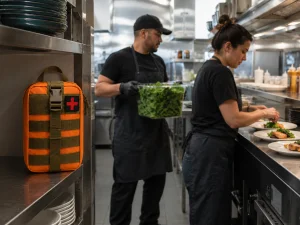
Where the kit is stored matters too. Good locations may include near the kitchen exit, in an employee break area, inside an office, near a front-of-house service station, or in another dry place that everyone knows about. Try not to lock it deep inside one drawer or let it disappear into the same storage zone as cleaning supplies and takeout bags.
For larger restaurants or teams working across separate areas, more than one restaurant safety kit can make sense. Keep one near the kitchen, one near front-of-house, and another near receiving or storage areas. That way, employees do not have to cross half the restaurant looking for supplies during the busiest part of the shift.
Food service first aid supplies also need occasional check-ins. Bandages, wipes, gloves, and gauze usually disappear the fastest. Tape sometimes decides it is “not feeling sticky today.” Scissors and tweezers also have a habit of quietly moving into another drawer.
A quick monthly check and regular restock can help keep everyday supplies ready to go. Restaurant work already moves fast enough. Keeping basic first aid items close by is not about adding another task. It is about helping staff handle everyday small issues with less stress and get back to guests, food, and the rest of the shift.
FAQ
1.What should be in a restaurant first aid kit?
A restaurant first aid kit can include adhesive bandages, gauze pads, cleansing wipes, medical tape, disposable gloves, scissors, tweezers, elastic bandages, cold packs, and basic burn dressings.
2.Where should a restaurant first aid kit be kept?
Keep it in a dry, easy-to-reach place, such as near the kitchen exit, employee break area, office, front-of-house service station, or another location all employees know about.
3.Do restaurants need separate first aid kits for the kitchen and front-of-house?
For larger restaurants or workplaces with separate areas, keeping more than one kit can be useful. One near the kitchen, one near front-of-house, and one near receiving or storage can make supplies easier to reach.
4.What supplies run out most often in restaurants?
Adhesive bandages, cleansing wipes, disposable gloves, gauze pads, and medical tape are often used most frequently and should be checked regularly.
5.How often should a restaurant first aid kit be checked?
A quick monthly check is helpful, with a more complete restock every three to six months. High-use areas may need more frequent checks.
6.Can a restaurant first aid kit handle every kitchen injury?
No. A first aid kit is for basic preparation and everyday minor situations. For serious injuries, ongoing bleeding, significant pain, or anything needing professional assessment, seek appropriate medical care.