Moving Day First Aid Kit: Be Ready for DIY, Renovation, and New-Home Chaos
Moving day is basically a full-body workout disguised as a life event. There are boxes everywhere, the drill is going nonstop, the furniture instructions somehow make less sense the longer you stare at them, and one mystery screw is always left over.
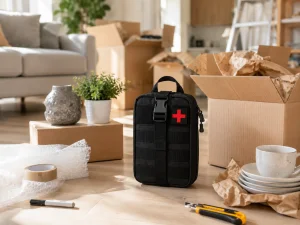
That is exactly why having a moving day first aid kit nearby is a smart move. It does not need to look like a mini emergency room, but it should be easy to grab when the usual moving-day chaos shows up. And please, do not pack it inside the last sealed box. Nothing kills the vibe faster than someone getting a paper cut while everyone starts yelling, “Where did we put the bandages?”
The Little Injuries That Love Showing Up on Moving Day
Unpacking boxes can mean sharp cardboard edges, box cutters, staples, and the occasional surprise scrape. Building a bed frame, bookshelf, or TV stand can lead to pinched fingers, small cuts, and the classic “I definitely should have worn gloves” moment.
Then there is the DIY side of things: hanging pictures, using a drill, tightening screws, cleaning a new apartment, or carrying heavy furniture up the stairs. Blisters, minor burns, small splinters, sore wrists, and bumps happen more often than anyone plans for.
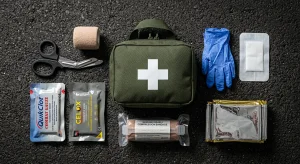
A practical home renovation first aid kit should include adhesive bandages, gauze pads, antiseptic wipes, medical tape, tweezers, scissors, and disposable gloves. For bigger projects, it also helps to have elastic bandages, instant cold packs, blister pads, burn dressings, and basic bleeding-control supplies.
You do not need to overthink it. The goal is simple: keep the essentials together so you can handle a small problem quickly and get back to building that bookshelf without turning the whole afternoon into a rescue mission.
Keep the Kit Where Everyone Can Find It
The best place for your kit is not the bottom of a storage bin or behind twelve moving boxes. Put it somewhere obvious: on the kitchen counter, near the tool area, beside the open boxes, or in the car close to the door.
For new homeowners, it makes sense to keep it as part of a new homeowner safety kit with a flashlight, spare batteries, and a basic tool set. That way, when you are hanging curtains, assembling furniture, fixing a loose cabinet handle, or finally opening that last “miscellaneous” box, you are ready to go.
Do Not Try to Tough It Out
Having DIY emergency supplies nearby is not about expecting disaster. It is about keeping a tiny problem from becoming the reason your whole moving day goes sideways.
A small cut? Clean it and cover it. A sore wrist after carrying boxes? Take a break and use a cold pack. Feeling tired, thirsty, or frustrated? Honestly, pause for a minute. Moving is already enough of a chaos marathon.
Handle the little stuff early, take a breath, and then get back to making the new place feel like home.
FAQ
1.What should I put in a moving day first aid kit?
Start with adhesive bandages, gauze pads, antiseptic wipes, medical tape, tweezers, scissors, disposable gloves, elastic bandages, and instant cold packs.2. Do I need a separate first aid kit for home renovation projects?
Not necessarily, but keeping a dedicated home renovation first aid kit near your tools makes it much easier to handle everyday cuts, scrapes, splinters, and minor burns.
3. Where should I keep first aid supplies during a move?
Keep them somewhere visible and easy to reach, such as the kitchen counter, the main tool area, near open boxes, or inside your vehicle.4. Why should new homeowners keep a safety kit at home?
New homes often come with a long list of cleaning, assembling, unpacking, and small repair tasks. Keeping moving day safety supplies ready makes those everyday projects a lot less stressful.
Moving Day First Aid Kit: DIY and Home Renovation Safety
Moving Day First Aid Kit
Home Renovation First Aid Kit
DIY Emergency Supplies
New Homeowner Safety Kit
Moving Day Safety Supplies
Furniture Assembly Safety
Home Repair Safety
Apartment Moving
DIY Home Projects