Landscaping First Aid Kit Checklist for Outdoor Crews
Pruning trees, mowing lawns, hauling stones, clearing leaves, washing down patios—outdoor work sounds simple until the heat kicks in, the tools come out, and somebody gets scratched by a branch five minutes into the job.
That is why a reliable landscaping first aid kit belongs on every work truck. It does not need to look like a full-on ambulance setup, but it should be easy to grab when the usual outdoor-work chaos shows up. Because nobody wants to be holding a cut finger while digging through rakes, trimmers, and tool bags looking for one bandage. Not the move.
Common Landscaping Injuries to Prepare For
Yard work has a way of creating small injuries when you least expect them. Pruning shrubs, roses, and trees can lead to cuts, thorn scratches, splinters, and scrapes. Carrying pavers, mulch bags, flowerpots, or lumber can mean blisters, pinched fingers, and sore wrists.
Then there are the everyday tools: pruning shears, shovels, rakes, hedge trimmers, and lawn equipment. They are all useful—right up until someone gets distracted for half a second. Add hot weather, sweat, sun exposure, and bug bites to the mix, and a long workday can get uncomfortable pretty fast.
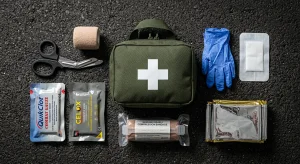
A practical outdoor work first aid kit should include adhesive bandages, gauze pads, antiseptic wipes, medical tape, tweezers, scissors, disposable gloves, elastic bandages, instant cold packs, and insect-bite relief supplies. You do not need to pack a mobile pharmacy. You just need the essentials organized and ready when they matter.
Why a Tough, Water-Resistant Bag Makes Sense
Landscaping jobs are messy by nature. Dirt, grass clippings, dust, morning dew, mud, rain, and cleaning water all come with the territory. A thin indoor-style kit might look fine on a shelf, but it is not exactly built for getting tossed into the back of a work truck every day.
A solid gardening safety kit should have a durable outer bag, water-resistant material, strong zippers, and clear internal compartments. That way, the supplies stay protected even when the worksite does not.
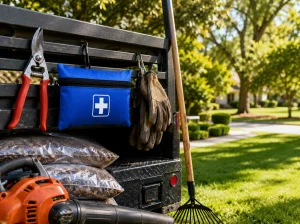
For crews moving between different yards or job sites, it also helps to keep the kit in one consistent place—hung near the truck’s tool rack, behind a seat, by the equipment box, or near the truck door. Everyone should know where it is. No guessing, no digging through twenty pounds of gear.
Handle Small Problems Before They Slow Down the Job
The point of keeping lawn care emergency supplies nearby is not to assume the worst. It is to stop small problems from turning into a long interruption.
A thorn scratch? Clean it and cover it. A sore wrist after moving stones? Take a break and use a cold pack. Feeling wiped out in the heat? Get water, find shade, and slow down for a minute. Toughing it out is not always the flex—working safely and finishing the job well is.
FAQ
1. What should be in a landscaping first aid kit?
Start with adhesive bandages, gauze pads, antiseptic wipes, medical tape, tweezers, scissors, disposable gloves, elastic wraps, cold packs, and insect-bite relief supplies.2. Why should outdoor crews use a water-resistant first aid kit?
Landscaping work often involves dirt, moisture, rain, grass clippings, and equipment dust. A water-resistant, durable bag helps protect the supplies inside.
3.Where should a first aid kit be stored on a work truck?
Keep it somewhere visible and easy to reach, such as near the tool rack, behind a seat, beside the equipment box, or close to the truck door.
4.How often should landscaping crews check their first aid supplies?
Do a quick check every week and replace any used, wet, damaged, or expired items as soon as possible.