When you’re kayaking, canoeing, or paddleboarding, water inevitably finds its way in.
A sudden wave can wash over the bow. Wet hands might reach into your gear bag. Your water bottle could tip over. Or, your boat might unexpectedly capsize.
For many of us, that’s just part of the experience.
For adhesive bandages, gauze, and paper packaging?
Not so much.
This is why a functional kayaking first aid kit requires more than just careful packing. It also demands protection from moisture, secure attachment, and easy access, even with wet hands and a rocking boat.
Keep Your First Aid Kit with You
Leave your first aid kit unsecured, and a rogue wave, a sharp turn, or a capsize can send it overboard before you can react.
“See you downstream.”
Hardly ideal.
A first aid kit for paddlers needs a secure, accessible location that won't interfere with paddling, disrupt your balance, or block entry and exit.
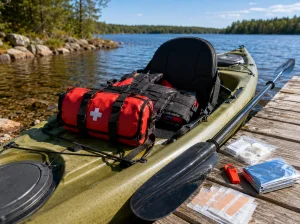
Depending on your watercraft, consider these attachment points:
- A sealed hatch or dedicated storage compartment
- A seat-back attachment system
- Deck rigging or fixed bungee cords
- A properly sealed dry-storage area
The goal isn't just to have a first aid kit.
The goal is to ensure it remains with the boat when you truly need it.
Water-Resistant Is Not Waterproof
A water-resistant first aid bag handles routine spray, ambient dampness, and minor splashes.
But let’s be clear:
Water-resistant and fully waterproof are not the same.
A water-resistant bag can shed light spray. It’s not built to stay dry after submersion, free-floating, or prolonged exposure in a wet boat.
It can withstand a light drizzle.
It’s not designed for a deep dive.
For added protection, compartmentalize moisture-sensitive items in separate, sealed inner pouches. Group adhesive bandages, sterile gauze, cleansing wipes, first aid tape, and emergency blankets into smaller protective bags.
The outer bag takes the initial impact.
The inner pouches deliver the critical message:
“Not today, water.”
Keep Medical Packaging Intact
Supplies within a water sports emergency kit should remain in their original, sealed packaging until needed.
Avoid unwrapping gauze, dressings, or adhesive bandages prematurely, even to save space. Their packaging is the primary barrier against moisture, dirt, handling, and contamination.
After a wet outing, check your supplies for these signs:
- Torn or damaged wrappers
- Visible moisture inside the packaging
- Soft, warped, or damaged paper layers
- Loose seals or peeling edges
- Discoloration or other unusual changes
If a package is damaged or water has breached the wrapper, don't just dry it and return it to the kit.
The packaging remembers.
And so does the integrity of the item inside.
Wet Hands Need Simple Organization
On land, a first aid bag with fifteen tiny pockets might seem like peak organization.
On the water, with cold, wet hands, it can quickly become a frustrating, zipper-filled puzzle.
“Great...which pocket has the gauze?”
Whether you’re outfitting a canoe first aid kit or a paddleboarding first aid kit, commonly used supplies need clear, easy-to-access sections.
Effective organizational features include:
- Transparent, sealed inner pouches
- Simple compartments with obvious labels
- Oversized zipper pulls for easier grip
- Frequently accessed items positioned near the top
- Separate storage for wet and dry necessities
The process should be simple:
Open it.
Spot what you need.
Grab it.
Done.
What to Pack in a Kayaking First Aid Kit
The contents of a kayaking first aid kit should always match your route, weather, number of paddlers, distance from shore, and proximity to emergency services.
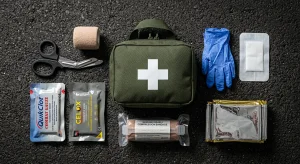
A basic personal kit typically includes:
- Assorted adhesive bandages
- Cleansing or antiseptic wipes
- Sterile gauze pads
- First aid tape
- Disposable gloves
- An emergency blanket
- A whistle
- Any personal medications or health supplies
An emergency blanket is compact and crucial for someone wet, chilled, or awaiting help after returning to shore.
A whistle can be vital for attracting attention when voices are lost to wind, waves, or distance.
These items should not turn your boat into a floating infirmary.
The kit must remain compact, organized, and practical enough to ensure you always bring it.
First Aid Supplies: One Part of Water Safety
A personal water sports emergency kit can treat minor cuts, scrapes, blisters, and common issues.
It cannot replace:
- An appropriate personal flotation device (PFD)
- Reliable communication and location equipment
- Thorough weather and route planning
- Essential water safety training
- Professional rescue services
The first aid kit addresses specific minor problems.
The PFD keeps you afloat.
Communication gear lets you call for help.
The route plan prevents your group from drifting, wondering:
“Wait...did we make the right turn back there?”
That's where true safety begins.
Inspect the Kit After Every Wet Trip
Never put your kit away immediately after a rainy or splash-heavy outing.
Open the main bag, remove the inner pouches, and carefully inspect the contents. Allow the outer bag to air dry completely before storing it.
Confirm that:
- The bag itself and its attachment straps are still secure
- All zippers and closures function properly
- Inner pouches remain fully sealed
- Individually wrapped supplies are dry and undamaged
- Used or expired items have been replaced
- The whistle and other safety accessories are still present
A quick post-trip inspection is far less frustrating than discovering on your next adventure that the gauze is damp and your adhesive bandages have decided:
“Sorry, we’re not sticky today.”
A Personal Kit Is Not a Professional Water-Rescue System
A first aid kit for paddlers supports basic preparedness, but it is not a substitute for professional rescue equipment.
For serious injuries, breathing difficulties, head impacts, loss of consciousness, signs of hypothermia, or any other urgent medical condition, immediately stop activity and contact appropriate emergency or rescue services.
Don't expect a small bag of gauze, gloves, and bandages to do the job of an entire rescue team.
It never signed up for that role.
Ultimately, smart paddling preparation relies on a few key principles:
Secure the bag.
Double up on moisture protection.
Keep essential supplies within easy reach.
Inspect everything after wet trips.
Because paddling already brings its share of unexpected splashes.
Your first aid kit shouldn’t add:
“Surprise—I’m soaked too.”
FAQ
Q1: What should I include in a kayaking first aid kit?
A basic kayaking first aid kit should contain adhesive bandages, cleansing wipes, sterile gauze, first aid tape, disposable gloves, an emergency blanket, a whistle, and any personal medications. Always adjust contents based on your specific route, weather conditions, and number of paddlers.
Q2: Is a water-resistant first aid bag fully waterproof?
No. While a water-resistant first aid bag offers protection against routine splashes and damp environments, it is not designed for complete or prolonged submersion.
Q3: Should first aid supplies be stored in separate sealed pouches?
Yes. Placing moisture-sensitive items in sealed inner pouches adds a critical layer of protection. Always keep individually wrapped medical products in their original packaging.
Q4: Where’s the best place to secure a canoe first aid kit?
A canoe first aid kit should be secured in an easily accessible location that doesn’t impede paddling and won’t easily fall overboard. The optimal spot will vary depending on your canoe’s specific storage or attachment points.
Q5: How does a paddleboarding first aid kit differ?
A paddleboarding first aid kit typically needs to be especially compact and extremely secure due to limited storage space. It also benefits from robust inner moisture protection and user-friendly, easy-to-open compartments.
Q6: Can a water sports emergency kit replace a life jacket?
Absolutely not. A water sports emergency kit is a supplemental safety tool and cannot substitute for a personal flotation device (PFD), communication equipment, comprehensive water safety training, or professional rescue services.