IFAK Kits: Contents and Tactical Configuration
Continuing our series on Operational Medicine, this article focuses on IFAK kits: their contents, placement, and configuration recommendations. If questions arise, leave a comment, and we will address them.
What is an IFAK Kit?
IFAK, or "Individual First Aid Kit," refers to a personal medical kit. Originally, in the US Army, it stood for "improved first aid kit." Unlike the basic individual kits of the 1990s—often just iodine or band-aids—the modern IFAK specifically treats combat wounds or severe trauma.
IFAKs are crucial for Armed Forces (FAS) and Security Forces and Corps (FFCCS) personnel. They offer rapid initial medical assistance during missions or services. This isn't a luxury; it's an operational necessity.
Why an IFAK? The Operational Necessity
FAS and FFCCS personnel often act as first responders. They reach incident scenes before advanced medical support arrives, or worse, they may become casualties themselves. Therefore, each professional must carry an individual first aid kit as standard equipment. It's a fundamental layer of security and response capability in tactical medicine.
Essential Contents of an IFAK Kit
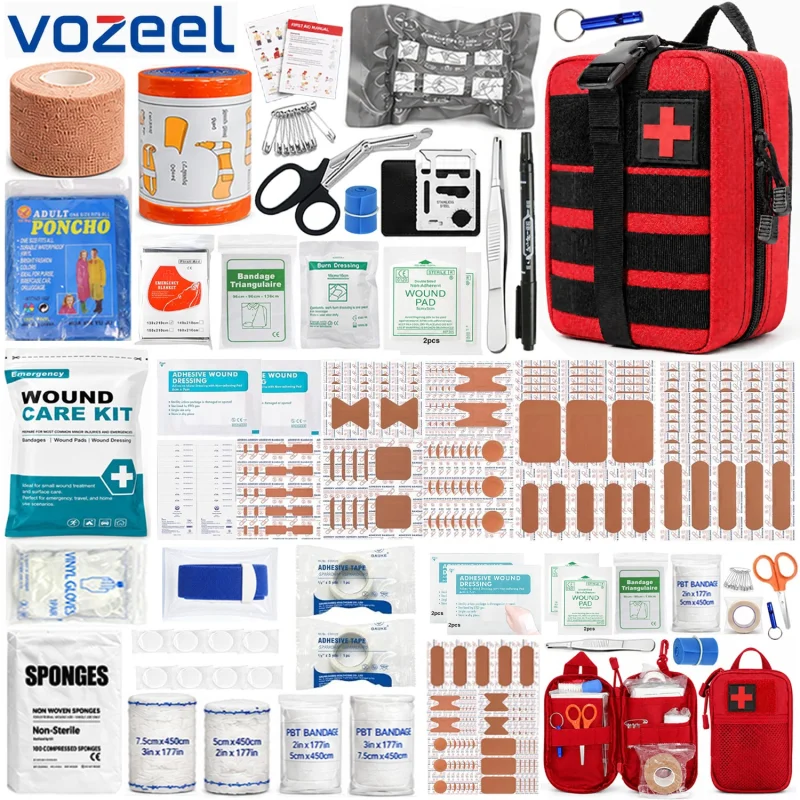
IFAK kit contents must be uniform within a unit. Any modifications require approval from the Unit Chief or Tactical Medic. All included devices must be CoTCCC (Committee on Tactical Combat Casualty Care) approved. Everyone must train to use each element. Carrying it is not enough; you must know how to use it.
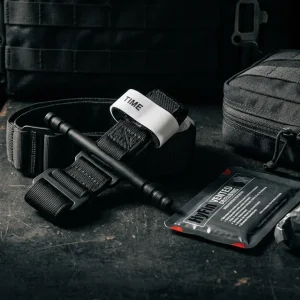
- Extremity tourniquet (carried outside the IFAK).
- Hemostatic gauze (Z-Fold, preferably).
- Nasopharyngeal airway (with lubricant).
- Emergency bandage (Israeli Bandage type, 6 inches).
- Two chest seals (with valve, preferably).
- Emergency blanket (thermal).
Recommended Additional Content
While the above forms the core, certain elements enhance your individual first aid kit's response capability:
- Compressed absorbent gauze (for wound packing).
- Rigid eye shield.
- Small cloth tape (surgical tape type).
- Combat pills (CWMP) for military IFAK.
- TCCC casualty card for military IFAK, or IMVI card for police IFAK.
- Fine blue permanent marker (for marking tourniquets, etc.).
- Pair of medical gloves (nitrile, appropriate size).
Strategic Placement of the IFAK
Standardized IFAK placement is vital for operational medicine. Uniform criteria improve response time and effectiveness:
- All members of the same unit must carry the IFAK in the same place. This allows any colleague quick access to an injured person's first aid kit, even if they are unconscious.
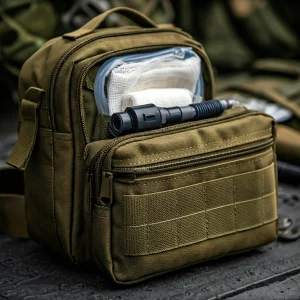
- Preferably, place it on the 1st line of equipment or the duty belt. Backpacks or vests can detach or become inaccessible at critical moments.
- It must be clearly identified with a red pull tab, medical cross, or another quick visual distinction.
- The pocket or pouch must be compact, with no extra space that invites storing other objects. An IFAK kit is only for medical material.
Frequently Asked Questions (FAQ)
Can I customize my IFAK kit?
Yes, but with restrictions. Customizations must be minimal and approved by your unit leader or tactical medic. The goal is to maintain uniformity, ensuring any colleague can use your first aid kit effectively.
How often should I check my IFAK?
A quarterly review of your IFAK kit is recommended. Check material expiration dates, packaging condition, and confirm that contents remain complete and functional. After any use, immediately replace consumed items.
Is it legal to carry an IFAK kit in my civilian vehicle?
Generally, yes. Carrying a first aid kit with emergency medical supplies is not restricted. However, using certain elements, such as nasopharyngeal airways, requires specific training. An IFAK in the vehicle increases response capability in case of an accident or emergency.