Building a Mission-Ready First Aid Kit: Standardized Gear for High-Risk Environments
Off-the-shelf plastic first aid kits are loaded with filler. You open a 200-piece kit and find 150 adhesive strips, two alcohol wipes, and a pair of plastic tweezers that snap under pressure. That works for a papercut in an office cubicle. It fails completely on a remote job site, in a tactical vehicle, or during a severe industrial incident.
Building a custom kit lets you control the quality, ratio, and form factor of your medical supplies. You eliminate expired fluff and equip your team with tools that actually stop arterial bleeding, secure compromised airways, and manage severe trauma before EMS arrives.
Compliance vs. Capability: ANSI Z308.1 Standards
OSHA standard 29 CFR 1910.151 mandates adequate medical supplies, but it leaves the specifics vague. To get concrete guidance, safety managers rely on ANSI/ISEA Z308.1-2021. The standard divides kits into two primary tiers:
- Class A Kits: Designed for common workplace injuries like minor cuts, abrasions, and mild burns. Typical for low-density offices and light retail.
- Class B Kits: Packed with higher quantities and broader varieties of supplies intended for high-risk, complex, or heavy industrial environments.
Compliance is the baseline, not the ceiling. If your crew operates power tools, heavy machinery, high-voltage equipment, or operates in isolated terrain, a standard Class A box won't cut it. You need dedicated trauma gear configured for rapid access under stress.

The Core Modules of a Custom Trauma Build
Build your kit around life threats first. Massive bleeding kills in minutes. Hypothermia accelerates shock. Pain and minor injuries come last. Categorize your loadout into four operational modules.
1. Bleeding Control (MARCH Protocol - Massive Hemorrhage)
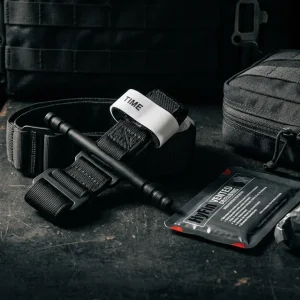
Every custom field kit requires CoTCCC-approved windlass tourniquets like the CAT Gen 7 or SOFTT-Wide. Skip cheap online knockoffs. Their plastic windlasses bend and snap under real torque. Pair tourniquets with hemostatic gauze (QuikClot or Celox), 4-inch and 6-inch pressure dressings, and compressed z-folded gauze for deep wound packing.
2. Airway & Respiration
Punctured lungs demand immediate action. Include vented occlusive chest seals to treat tension pneumothorax from penetrating trauma. Keep a size 28F Nasopharyngeal Airway (NPA) with water-based lubricant in the main compartment for unresponsive casualties with compromised airways.
3. Burns & Musculoskeletal Injuries
Industrial burn gel dressings (4x4 inch and 8x8 inch sterile pads) stop burn progression and lower infection risk. For fractures and dislocations, pack a moldable aluminum SAM Splint (36-inch) alongside elastic cohesive bandages and triangular bandages for immobilization.
4. Utility & Personal Protection Equipment (PPE)
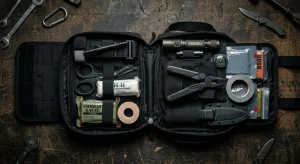
Nitrile gloves are non-negotiable. Pack at least four pairs in high-visibility colors so you can easily spot dark blood on your hands during a sweep. Add heavy-duty 7.25-inch trauma shears capable of slicing through denim, leather, and boots. Include a Mylar solar blanket to retain body heat during hemorrhage-induced shock.
Choosing the Right Enclosure: Cordura vs. Hard Cases
Gear dies in terrible bags. A tear in a thin nylon pouch ruins sterilized medical components long before you open them. Match your container to the operating environment.
For vehicle mounting, foot patrols, and rapid movement, use a 500D or 1000D Cordura bag with a tear-away MOLLE backing platform. This allows you to rip the entire medical pouch off a headrest or plate carrier in one motion. Internal elastic loops and mesh dividers keep items organized so gear doesn't spill into the mud when unzipped.
For marine work, open pickup beds, or static job site stations exposed to heavy washdowns, choose an IP67-rated waterproof hard case. Rigid polycarbonate or polypropylene cases withstand crushing forces and keep dust, salt air, and water out of critical supplies.
Supply Ratios and Maintenance Cycles
One kit does not cover twenty workers spread across a two-acre job site. Distance matters. Bleeding out takes under three minutes. If your kit is five minutes away in the site trailer, it might as well be on the moon.
Deploy a layered system: individual First Aid Pouches (IFAKs) on worker belts, mid-sized vehicle kits in every truck, and a large Class B master station at the central staging point. Audit supplies every 90 days. Replace latex-free elastic bandages when they lose stretch, update medications before expiration dates, and swap out sterile packaging if seals degrade from heat or vibration.
How often should custom first aid kits be audited and restocked?
Inspect kits quarterly at a minimum. Conduct an immediate audit after any incident where gear was used. Pay close attention to seal integrity on sterile dressings, expiration dates on hemostatic agents, and physical wear on rubberized components caused by vehicle heat cycles.
What is the difference between ANSI Class A and Class B kits?
Class A kits contain basic supplies meant for standard workplace injuries like small cuts, burns, and minor sprains. Class B kits carry significantly larger quantities of supplies and add specialized items—like padded splints and wider trauma dressings—meant for higher-risk work environments or larger workforce numbers.
Can custom-built kits replace mandatory workplace OSHA compliance kits?
Yes, provided the custom build meets or exceeds the minimum supply counts and item categories specified in ANSI Z308.1-2021 for your risk level. Customizing allows you to start with ANSI minimums as a baseline and layer on high-grade trauma gear suited to your specific site hazards.