Home Gym First Aid Kit: Small Injuries You Can Prepare For
Having a few dumbbells, a treadmill, a yoga mat, or even just a corner of the living room for workouts is pretty great. No waiting for machines, no commute, no awkward locker room situation. You can work out in sweatpants and be back on the couch five minutes later. Honestly, not bad.
But home workouts come with their own little “well, that happened” moments.
A dumbbell bumps a toe. A treadmill gives your heel a blister. A resistance band snaps back when you least expect it. A yoga pose turns into a weird wrist scrape. Or you finish a workout and realize your ankle is suddenly not feeling very cooperative.
Most of these situations are minor, but they can still interrupt your routine fast. A home gym first aid kit helps you handle small issues without turning your workout space into a frantic search for bandages.
Home Workouts Usually Come With Small Annoyances
Weights, kettlebells, resistance bands, treadmills, jump ropes, and floor exercises all have their own ways of creating small problems.
Dropped weights and crowded workout spaces can lead to bumps or scrapes. Running and jumping can cause blisters. Yoga, planks, and floor exercises can leave hands, elbows, or knees feeling rubbed raw. Even moving a bench or adjusting equipment can lead to a tiny cut or pinched finger.
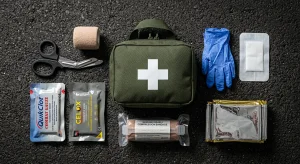
That is why basic workout first aid supplies are worth keeping nearby. Adhesive bandages, gauze pads, cleansing wipes, medical tape, instant cold packs, blister pads, disposable gloves, and elastic wraps can cover a lot of everyday situations.
You do not need to turn your workout corner into a full medical station. The goal is just to avoid limping around the house looking for a bandage after leg day. Hard pass.
Keep Your Kit Close to the Workout Area
A first aid kit does not help much if it is buried in a hallway closet behind old batteries, random cords, and things nobody remembers buying.
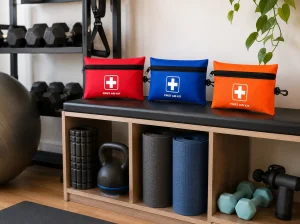
For a home gym, keep the kit near the treadmill, inside an equipment cabinet, beside a yoga mat basket, or in a drawer close to the training area. It does not need to take up much space, but it should be easy to reach.
A small home exercise safety kit also works better when everyone in the home knows where it is. That way, if someone gets a scrape, blister, or bump, nobody has to start asking, “Wait, do we even have a first aid kit?”
Do Not Turn a Small Injury Into a Tough-Guy Workout Story
For a minor bump, an instant cold pack can be useful. For heel blisters, blister pads may help reduce rubbing. For small scrapes, cleaning the area and covering it with a basic dressing can help keep things more comfortable.
But there is a difference between a small annoyance and something worth taking seriously.
If pain is sharp, swelling keeps getting worse, movement becomes difficult, or you think you may have a more serious sprain or injury, it is better to pause the workout instead of trying to “push through it.”
Skipping one workout is not going to ruin your progress. Turning a small issue into a bigger one just to finish your last set? That is not really a win.
A Small First Aid Kit Helps Keep Your Routine Moving
A fitness first aid kit is not about making workouts feel risky. It is about being ready for normal everyday things that can happen when people train at home.
Blister pads, cold packs, bandages, and basic wraps may not seem exciting, but when you need them, you will be glad they are nearby.
Home workouts are about building consistency over time, not trying to prove something every single session. Handle the small stuff early, take care of yourself, and you will be ready for the next workout instead of spending the next few days walking around like your ankle has personal beef with you.
FAQ
Q1: What should be in a home gym first aid kit?
Useful basics include adhesive bandages, gauze pads, cleansing wipes, medical tape, instant cold packs, blister pads, disposable gloves, and elastic wraps.Q2: Where should I keep a first aid kit in a home gym?
Keep it near the treadmill, workout rack, equipment cabinet, yoga area, or a nearby drawer. The best spot is somewhere easy to reach and easy to remember.Q3: Are elastic wraps useful for home workouts?
Yes. Elastic wraps can be useful for basic support or securing a dressing, but they should not be wrapped too tightly. Stop using one if there is numbness, worsening pain, or unusual swelling.