From the curb, a food truck run looks effortless. Inside, it's a pressure cooker. Service windows drop, ticket printers clack without stopping, flat-tops hiss, and the expeditor barks orders into the line:
“Two tacos, one burger, extra fries!”
In seconds, three cooks are moving at full throttle in a space no larger than a walk-in closet.
Unlike a brick-and-mortar restaurant, a mobile rig crams commercial burners, razor-sharp cutlery, open fryers, and three line cooks onto four wheels hurtling down the highway.
When a burn or cut strikes in this environment, your food truck first aid kit isn't just a box on a shelf. It is a core operational tool. To keep your line running, it has to answer three immediate questions:
Where is it stored?
Is it locked down?
Can the crew grab it in three seconds or less?
Small Space Means the Kit Needs a Fixed Home
In a standard restaurant, safety gear can sit on a back-office shelf for six months untouched.
A mobile kitchen rewrites those rules every shift.
One afternoon you are parked on smooth downtown asphalt. The next morning you are bouncing over rutted gravel at an outdoor festival. At night, your entire kitchen hauls down the interstate back to the commissary.
If your first aid kit for food truck setups sits loose in an upper shelf, road vibration will scatter the contents. Boxes slide, bottles tip over, and medical supplies end up buried behind heavy food containers.
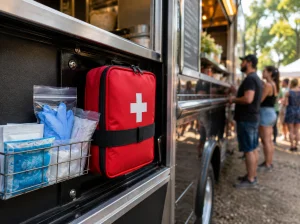
When a cook sears an arm during the noon lunch rush, nobody has time to dig through dry storage. Mount the kit firmly. Give it a fixed bracket that holds fast no matter how rough the drive gets.
Keep It Close to Staff—but Away From Food
A mobile kitchen first aid kit must sit within arm's reach without compromising food safety or encroaching on active prep stations.
Health inspectors routinely penalize operations that store medical gear near raw ingredients, prep boards, or clean utensil racks. Keep all medical stock strictly isolated in a dedicated staff zone.
Designating a clearly labeled cabinet or wall bracket off the main prep line keeps response times under five seconds and keeps your health department record clean.
The Truck Moves, So the First Aid Kit Should Not
Lateral g-forces never enter the mind of a stationary restaurant manager. On wheels, safety gear must never slide across stainless counters, spill from overhead compartments, or get crushed beneath heavy stockpots.
Reliable mounting methods include:
- Heavy-duty wall brackets with quick-release latches
- Recessed interior storage bays
- Industrial velcro or ratcheting utility straps
- Latching cabinets designated strictly for safety gear
- High-visibility crew storage zones
Your food truck safety supplies need to be ready for instant deployment the moment you park—not scattered across the diamond-plate flooring during transit.
Heat Is Another Thing Food Trucks Have Plenty Of
Flat-tops, double-basket fryers, steam wells, and beating summer sun quickly push internal truck temperatures past 100 degrees Fahrenheit.
Trapped heat destroys medical supplies. High temperatures melt tape adhesives, break down burn gels into runny liquid, and warp plastic packaging until sterile seals rupture.
Mount your mobile food vendor emergency kit well outside these hot zones. Never bolt it right beside fryers, exhaust hoods, or hot-holding cabinets simply because the wall space looks open.
What Basic Supplies Make Sense in a Mobile Kitchen?
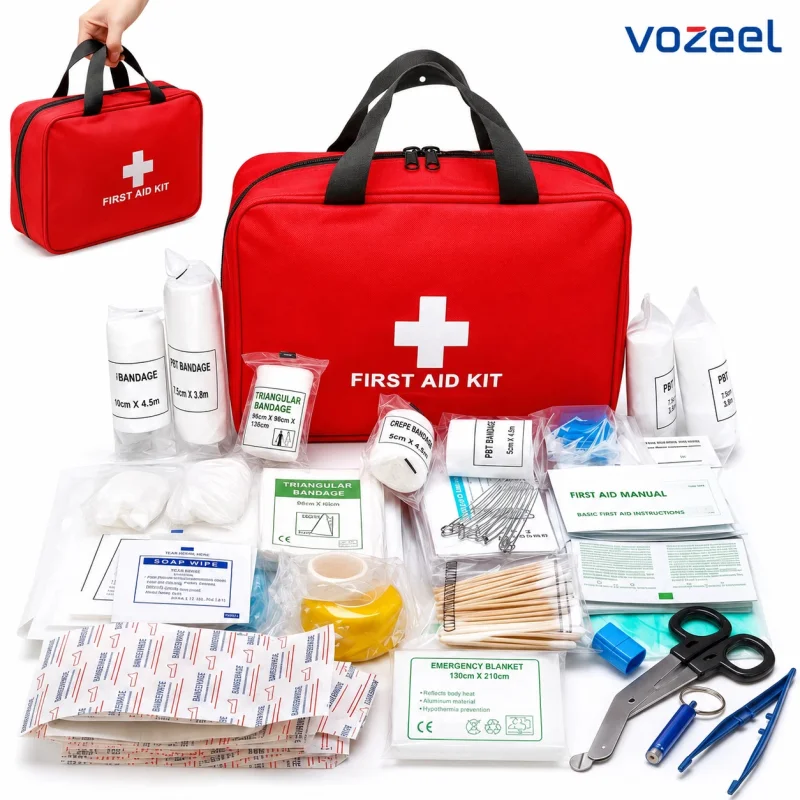
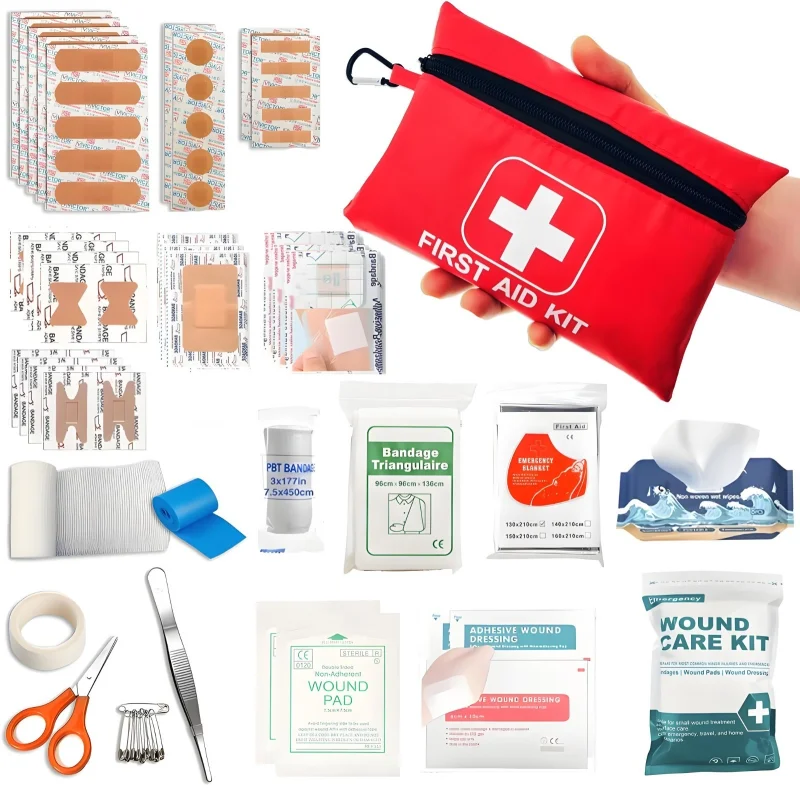
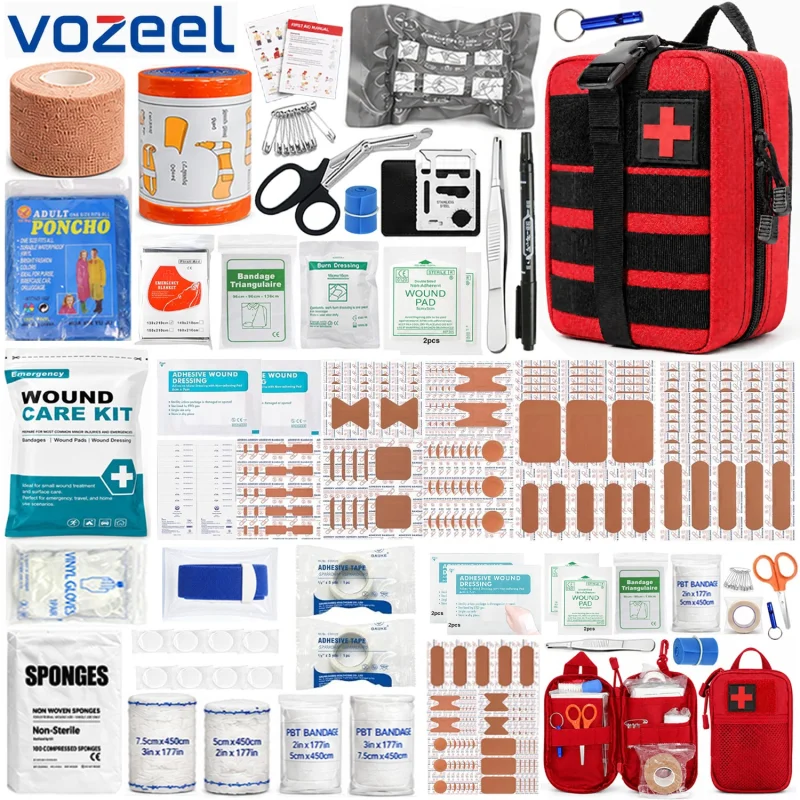
Focus on targeted items built for quick cuts and high-heat mishaps. Practical first aid supplies for mobile kitchen rigs include:
- Detectable, oil-resistant woven adhesive bandages in variable sizes
- Sterile burn pads and cooling water-based burn gels
- Heavy-duty sterile gauze compresses and surgical tape
- Antiseptic cleansing wipes
- Powder-free nitrile gloves
- Single-use instant cold compresses
- Bandage shears and precision tweezers
- Laminated quick-reference emergency action chart
Tailor your stock to your shift headcount, menu complexity, and local health regulations. The objective is direct, efficient utility for line injuries.
Outdoor Service Adds Dust, Moisture, and Weather
Outdoor operations face harsh elements: road dust, high humidity, sudden rainstorms, and wind-blown debris.
An unsealed case lets grime contaminate sterile dressings. Keep your food truck first aid kit locked inside a gasket-sealed, moisture-resistant case mounted off the floor.
Check supply packaging after humid shifts or heavy rain. If paper wrapping absorbs moisture or splits open, toss those items and restock immediately.
Do a Quick Check After Closing
Integrate a 60-second inventory check directly into your closing rundown.
Before locking the doors and hitting the road, check the following:
- Were any bandages or burn gels used during the shift?
- Are adhesive backings intact and dry?
- Did any packaging absorb grease or water?
- Is the container securely locked into its travel bracket?
Catching missing items before you hit the road gives you time to restock before tomorrow morning's prep shift.
A First Aid Kit Is Not a Substitute for Professional Care
Basic food truck safety supplies treat surface cuts, minor scalds, and minor abrasions. They cannot manage major medical trauma.
For deep wounds, severe burns, heat stroke, or severe allergic reactions, stop service immediately and call emergency services. Never risk crew health to keep the service window open.
Final Takeaway
A reliable food truck first aid kit accounts for the realities of working on wheels:
Anchor it firmly so transit won't throw it around.
Isolate it from open heat sources and food prep zones.
Ensure every team member knows its exact location.
Audit and replenish supplies after every shift.
Lunch rushes bring enough chaos. Your emergency gear should be the one thing on the truck that performs without fail.
FAQ
Q1: Where should a food truck first aid kit be stored?
Store your food truck first aid kit in a fixed, clearly marked location accessible to all crew members. Keep it completely separated from food prep surfaces, away from direct thermal output like fryers or grills, and locked down against vehicle movement.
Q2: How is a food truck first aid kit different from a restaurant first aid kit?
A first aid kit for food truck operations must handle constant road vibration, extreme ambient heat, tight spatial constraints, and potential weather exposure. Unlike brick-and-mortar facilities, mobile kits require heavy-duty mounting, heat-resistant storage, and sealed cases.
Q3: Should a mobile kitchen first aid kit be checked every day?
Yes. A quick end-of-shift check ensures used items like burn gels or bandages are restocked immediately. It also verifies that humidity, grease, or transit forces haven't damaged the supplies before your next run.
Q4: Can food truck first aid supplies handle serious injuries?
No. Basic first aid supplies for mobile kitchen operations manage minor workplace cuts, small surface burns, and basic abrasions. Major injuries, deep wounds, or severe burns require immediate professional medical intervention.