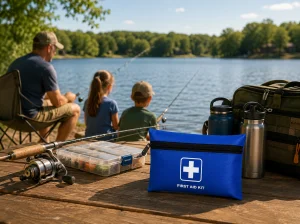
Fishing days, lake trips, and easy weekend adventures usually start with the same checklist: rods, tackle, snacks, folding chairs, and somebody asking, “We’ve got everything, right?” That question is often the unofficial soundtrack for a small surprise showing up later.
It might be a slippery rock near the shore, a branch that catches your arm while walking through brush, a tool edge during setup, or a fishing hook that suddenly decides it wants to be part of the day’s activity. Most situations are minor, but when the parking lot is far away, the nearest store is nowhere nearby, and your phone signal is doing its own thing, a fishing first aid kit can be one of the most useful items in your gear.
Why Bring a Fishing First Aid Kit?
A good outdoor first aid kit does not need to be oversized or complicated. It just needs to be easy to reach, organized, and ready for the small stuff that tends to happen around water, rocks, tools, and trails.
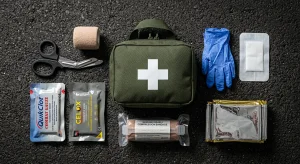
For a fishing trip or lake day, useful basics can include adhesive bandages, gauze pads, cleansing wipes, medical tape, disposable gloves, scissors, tweezers, elastic bandages, cold packs, and a spare towel.
The towel is especially underrated. Because “I probably won’t get wet” tends to live in the same category as “I’ll only fish for one hour.” Nice idea, not always the final result.
Keep Supplies Easy to Reach
A lake trip emergency kit works best when it is close by. Keep it in a fishing backpack, tackle box compartment, dry storage bag, boat compartment, or an easy-access spot in the car.
Try not to bury it under bait containers, rain jackets, snacks, and the mystery pile of gear that somehow appears on every fishing trip. When you need a wipe or bandage, nobody wants to turn the day into a full-on tackle-box scavenger hunt.
Small Problems Should Not Take Over the Whole Trip
A compact weekend adventure first aid kit is useful for common minor scrapes, small cuts, bumps, and outdoor messes. It is there to help with the basics so you can clean up, reset, and get back to enjoying the water.
For deeper hook injuries, heavy bleeding, significant pain, or injuries in sensitive areas, do not try to force a solution with the supplies in your bag. Seek professional medical care instead.
Quick Check Before You Leave
Before heading out, take one minute to check your fishing safety supplies. Are the wipes still fresh? Do you have enough bandages? Does the tape still stick? Are the scissors and tweezers actually still in the kit, or did they quietly move into another bag?
A little preparation does not take away from the relaxed part of fishing. It simply helps keep small problems from becoming the most memorable thing about the trip.
FAQ
1.What should be in a fishing first aid kit?
A fishing first aid kit can include adhesive bandages, gauze pads, cleansing wipes, medical tape, disposable gloves, scissors, tweezers, elastic bandages, cold packs, and a spare towel.
2.What should I do if a fishing hook gets stuck in skin?
If a hook is deeply embedded, in a sensitive location, causing heavy bleeding, or causing significant pain, avoid forcing removal and seek professional medical care.
3.Do I need a first aid kit for a lake trip?
Yes. Lake trips often involve wet ground, rocks, branches, fishing tools, and outdoor activities where small cuts, scrapes, and bumps can happen.
4.Where should I keep my outdoor first aid kit?
Keep it somewhere easy to reach, such as a fishing backpack, gear box, dry storage bag, boat compartment, or accessible area of the car.
5.Does a fishing first aid kit need to be large?
No. For most short fishing trips and lake outings, a compact and organized kit with basic supplies is usually enough.
6.What should I check before leaving for a fishing trip?
Check that wipes are fresh, bandages and gauze are stocked, tape still sticks, tools are present, and packaging has not become wet or damaged.