Farm and ranch work is not the same as a casual walk outside. You are dealing with tools, fences, dirt, livestock areas, work trucks, gates, wooden posts, wire, storage sheds, and whatever else the day decides to throw at you.
In other words, farm work does not always follow the plan.
A wire fence scratches your hand. A tool slips. You bump into the truck bed. You step wrong in the mud. Or you are working far from the house and suddenly realize you need a bandage right now.
That is where a farm first aid kit comes in. It helps keep small everyday problems from turning into a full “does anyone have anything in their truck?” situation.
Farm and Ranch Work Comes With Real-World Scrapes
Small injuries on farms and ranches often come from the working environment itself. Metal edges, wood splinters, fence wire, rope, latches, toolboxes, truck beds, dust, mud, and rough surfaces are all part of the job.
Gloves help, of course. But even when you are careful, small cuts, scrapes, bumps, and minor strains can still happen. Farm life does not exactly come with soft edges.
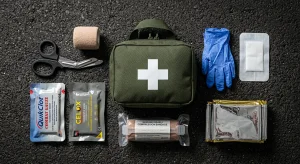
A practical ranch first aid kit should include adhesive bandages, gauze pads, cleansing wipes, medical tape, disposable gloves, instant cold packs, elastic wraps, and basic dressing supplies.
The goal is not to turn the kit into a mobile hospital. The goal is to make sure the everyday basics are easy to grab, organized, and not buried in a messy “farm version of a mystery box.”
Keep One in the Work Truck
A lot of farm work does not happen right next to the house. You may be near a fence line, behind the barn, around livestock areas, at the edge of a field, or driving around in a pickup or UTV.
When something small happens, having to go all the way back inside for supplies is annoying. Especially when your hands are already dirty or scraped. No thanks.
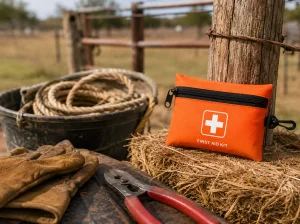
That is why a work truck emergency kit is so useful. Keeping a first aid kit in a pickup, UTV, toolbox, cargo box, or behind the seat helps the kit move with the work. For larger properties, remote areas, long outdoor workdays, or multiple people working together, having supplies in the vehicle can save time and frustration.
Dust, Moisture, and Organization Matter
Farm environments can be dusty, muddy, wet, and rough on supplies. If first aid items are tossed into a plastic bag or loose storage box, packaging can get crushed, damp, or hard to find.
Then, when you actually need something, the gauze is wrinkled, the tape is stuck to another package, and the cleansing wipes have somehow disappeared. Yeah… not ideal.
A durable farm safety kit with a zippered case, clear compartments, mesh pockets, or elastic holders can make a big difference. Bandages, gauze, tools, gloves, and tape should each have their own place. When you open the kit, you should be able to see what you need without dumping everything into the truck bed.
Remote Work Areas Need Extra Preparation
Farm and ranch work often happens far from the house, office, or nearest medical help. A first aid kit cannot solve every situation, but it can help you handle minor cuts, scrapes, and bumps before they interrupt the whole day.
If a wound is deep, bleeding does not stop, the injury involves dirty metal or animal-related equipment, or there is serious swelling, severe pain, or signs of infection, it is better to seek medical care instead of trying to tough it out.
The work will still be there tomorrow. Your body does not need to prove anything to a fence post.
A first aid kit is not there to make farm work feel dramatic. It is there to make everyday outdoor work feel a little more prepared. Farm days are already busy enough. A small injury does not need to steal the spotlight.
FAQ
Q1: Where should a farm first aid kit be kept?
It is smart to keep one kit in the house or office and another in a work truck, UTV, barn, or tool area. The best location is the one you can reach quickly during outdoor work.
Q2: What should be included in a farm first aid kit?
Useful basics include adhesive bandages, gauze pads, cleansing wipes, medical tape, disposable gloves, instant cold packs, elastic wraps, and basic dressing supplies.
Q3: How is a ranch first aid kit different from a regular home kit?
Ranch and farm work often involves tools, fences, dirt, truck beds, and remote work areas. A durable case, organized compartments, and vehicle-friendly storage are especially helpful.
Q4: Is it worth keeping a first aid kit in a work truck?
Yes. Many outdoor jobs happen far from the house or barn, so keeping supplies in the truck makes it easier to handle minor cuts, scrapes, or bumps without stopping the whole job.
https://www.vozeel.com/products/trauma-first-aid-kit-military-ifak-emt-survival-emergency-kit-bandages-band-aids