Event First Aid Kit: What Wedding and Event Teams Should Keep Ready
Weddings and events always look polished from the outside: flowers are perfect, lighting is dialed in, cameras are rolling, and everyone is trying to make the day look effortless.
Behind the scenes? It is usually high heels causing blisters, photographers standing for hours, someone scraping a hand while moving equipment, and at least one person asking, “Does anybody have a bandage?”
That is where a ready-to-grab event first aid kit comes in. It is not about turning the venue into a clinic. It is about stopping small issues from becoming the unexpected main character of the day. Because nobody wants a blister stealing the spotlight at a wedding.
Small Event Problems That Show Up All the Time
For weddings, the most common little issues are high-heel blisters, shoe rubbing, minor scrapes, jewelry irritation, and tired feet after hours of standing.
Photography teams and event crews deal with their own version of the same chaos. Carrying cameras, moving light stands, taping cables, walking between locations, and working outdoors can lead to small cuts, sore ankles, heat discomfort, sun exposure, or the occasional “how did I get that scratch?” moment.
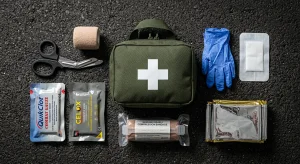
A practical wedding first aid kit does not need to be packed like a mobile hospital. A few useful basics go a long way: adhesive bandages, blister pads, gauze, medical tape, cleansing wipes, disposable gloves, instant cold packs, and elastic wraps.
The goal is simple: have the small stuff ready before someone is limping around in formal shoes while everyone is trying to stay on schedule.
Where You Keep It Matters More Than You Think
A first aid kit is not very helpful if it is buried under tripods, cables, and three equipment cases. That is not the vibe.
For wedding planners, keep the main kit near the registration table, backstage area, or coordinator’s working bag. For photographers, a compact photography team first aid kit can stay in the gear vehicle, camera backpack, or a spare work bag.
It also helps to keep a few high-use items—like blister pads and adhesive bandages—in the event lead’s pocket or crossbody bag. That way, when someone needs help, there is no full-scale “who has a bandage?” search happening across the venue.
Handle the Small Stuff Before It Slows Down the Day
A small blister can become a real problem after a few more hours of walking. A minor scrape can get more irritating after sweat, dust, equipment, and outdoor activity join the party.
Handle it early, take a quick break, drink some water, and get back to work. Event days are already busy enough. There is no prize for trying to tough it out until the end.
FAQ
Q1: Who should be responsible for the event first aid kit?
A coordinator, event manager, or designated crew member should take responsibility. More importantly, at least a few people on the team should know exactly where it is.Q2: What items are most useful for wedding-day emergencies?
Blister pads, assorted adhesive bandages, cleansing wipes, cold packs, and gauze are especially useful for long days in formal shoes and busy event spaces.Q3: Do photography teams need a large first aid kit?
Not always. A lightweight kit with high-use supplies is often enough for a camera bag or vehicle. Larger events can also keep a main kit in the crew area.