From the lobby, a grooming salon looks seamless: glistening coats, crisp breed trims, and calm dogs perched on hydraulic tables. It looks effortless.
Step behind the wash bay doors, and the reality hits. Japanese steel shears, high-torque clippers, wet tile, and ninety-pound dogs that suddenly decide mid-trim that they have had enough.
In a high-intensity shop, keeping a dedicated dog grooming salon first aid kit stocked for your crew isn't optional—it is fundamental shop infrastructure.
A critical baseline before moving forward:
This protocol covers human first aid for groomers, bathers, and shop staff.
When a dog gets hurt or shows medical distress, trigger your salon's veterinary emergency plan immediately. Human first aid supplies stay with the crew; they never double as animal care items.
The Hidden Occupational Hazards of Pet Grooming
Pet grooming demands fine motor control, rapid reaction times, and absolute physical control over unpredictable animals. Bathing staff and stylists operate razor-sharp tools, run high-pressure dryers, and maneuver slippery floors every shift.
Operations run clean until a reactive terrier lurches just as a curved shear closes. A slip takes milliseconds, and suddenly an operator needs immediate care.
Shear nicks, clipper burns, pinch wounds, and hard slips are constant risks. Solid pet grooming workplace safety pairs active hazard management with fast access to proper medical supplies.
Bathing Areas and Moisture Hazards
Wash stations are inherent slip zones. Water rarely stays inside the tub.
One shake from a wet Newfoundland covers floors, walls, and equipment in soapy water and coat fibers. That slick layer turns sealed flooring into an ice rink.
Floor accidents jump when staff rush across damp walkways cluttered with shed coat hair and heavy cords. Keeping main walkways dry cuts slip hazards overnight.
Mount human medical supplies well clear of splash radius, steam traps, and washing spray. Keep the station accessible, clean, and totally dry.
What Should a First Aid Kit for Dog Groomers Include?
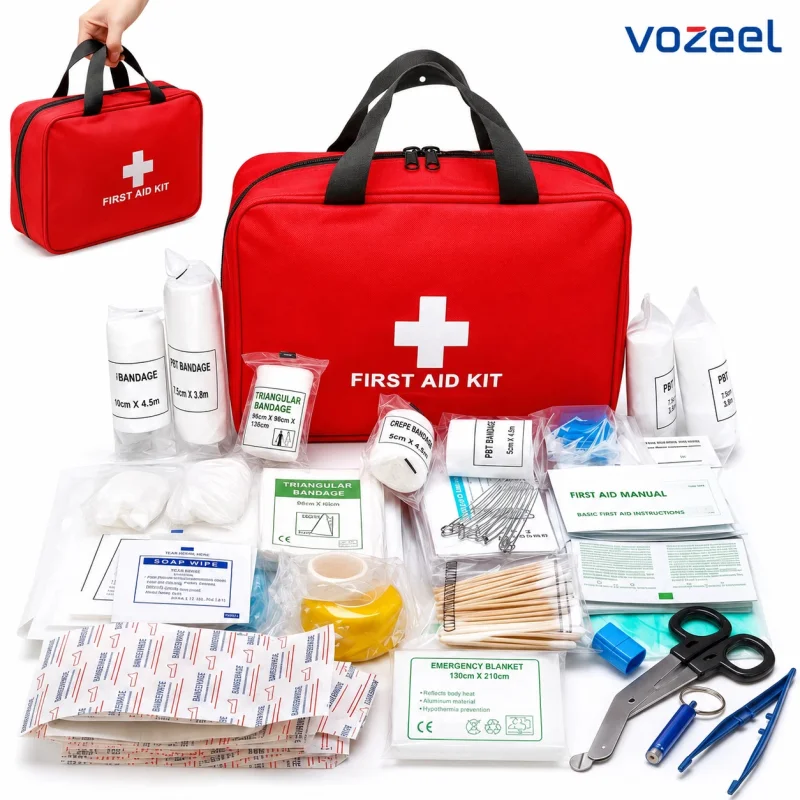
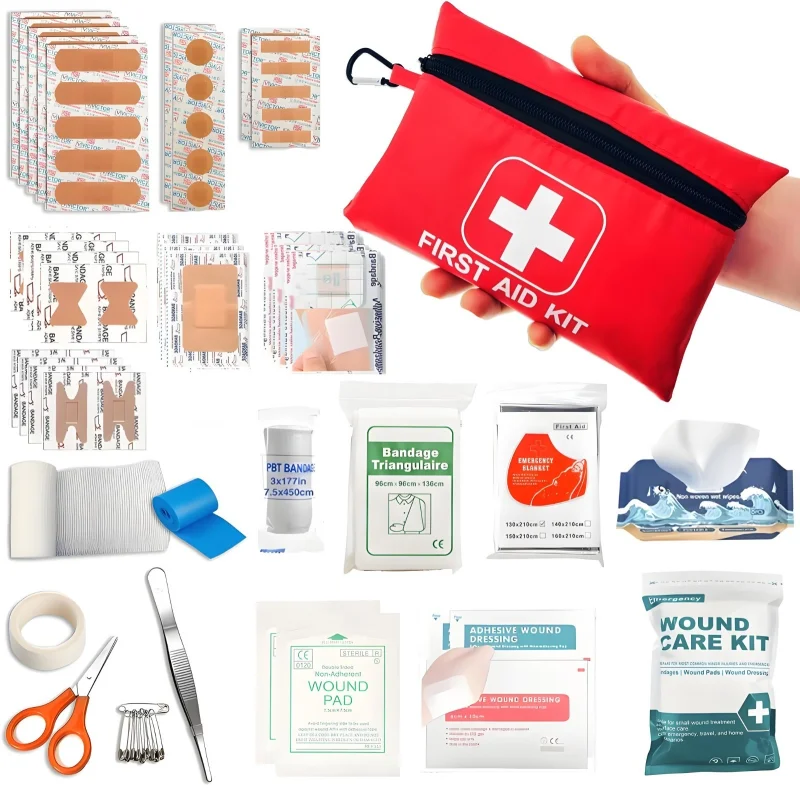
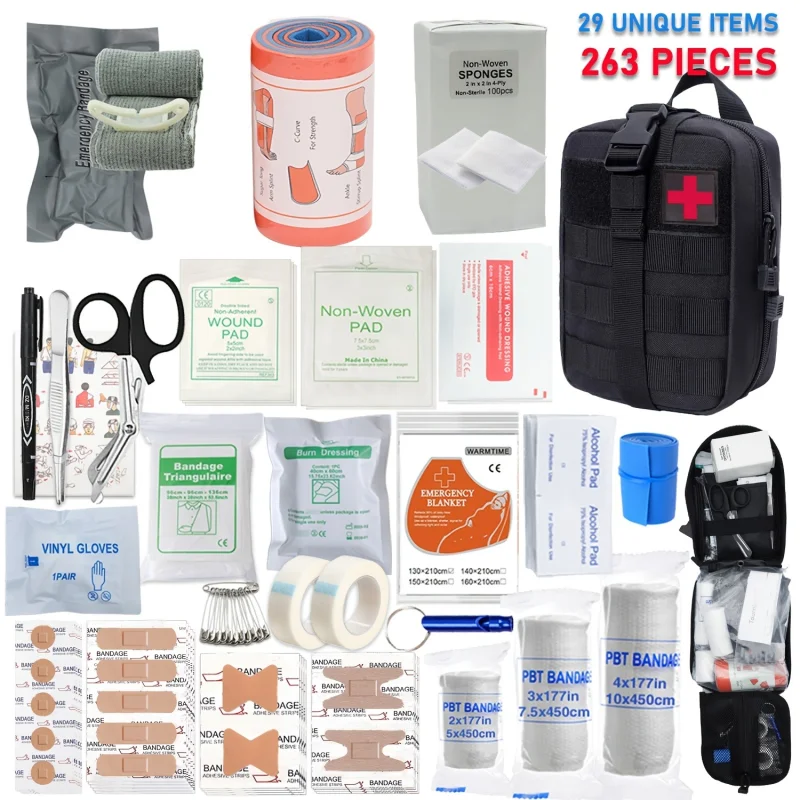
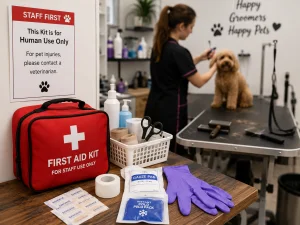
A targeted first aid kit for dog groomers handles trade-specific cuts, punctures, and damp working conditions. Build your kit around these core supplies:
- Heavy-duty woven fabric bandages (knuckle, fingertip, and strip shapes)
- Waterproof adhesive dressings for tub technicians
- Antiseptic wipes and chlorhexidine wash
- Sterile non-stick gauze pads
- Self-adhering cohesive wrap (human-grade elastic wrap)
- Medical-grade surgical tape
- Heavy nitrile disposable gloves
- Instant cold packs for sudden impacts or wrist sprains
- Fine-point precision tweezers for hair splinters and debris
- A clear workplace injury quick-reference card
Scale inventory volume to match staff headcount and daily table turn. Keep internal layout clean so pulling a single bandage doesn't spill supplies across the floor.
Location Matters: Immediate Access Saves Time
A fully loaded kit does nothing if your team is scrambling to find it during an active bleed.
Fix a permanent, visible home for your grooming shop first aid supplies. Wall-mount the case at eye level near the central assembly floor, break counter, or manager's station.
Never lock supplies inside cluttered supply closets or back rooms. When a stylist cuts a finger, they shouldn't lose minutes hunting down supplies. Rapid care keeps open cuts away from dirty wash water and loose coat hair.
Tool Handling and Shearing Discipline
Shears carry razor edges. Dremels, stripping knives, and #10 clipper blades demand sharp focus. When fatigue sets in during an eight-hour shift, momentary slips cause instant self-cuts.
Lock down tool discipline: dock shears in protective holsters when leaving the table, snap guards over idle blades, and clear table surfaces between dogs.
Your first aid supplies for groomers serve as a safety backup. Disciplined tool habits are your primary shield.
Managing High-Velocity Dryers and Floor Cables
High-velocity dryers blast ambient noise and blow coat hair through the air while motor cords snake across the floor. Combine table foot pedals, ramp leads, and ringing phones, and noise levels spike fast.
As afternoon turn speeds up, clear the floor. Duct-tape or channel power cables, store idle dryer hoses, and clear paths between bathing tubs and finishing tables.
Clean floor plans prevent falls before they start, keeping your medical kit on the wall where it belongs.
Humidity: The Silent Destroyer of First Aid Supplies
Bathing areas generate constant moisture. Steam and humidity gradually break down standard paper wrappers and ruin adhesive glues.
House your staff pet salon emergency kit inside a gasket-sealed, moisture-proof case. Run a monthly inspection on every item, flagging:
- Damp or peeling bandage wrappers
- Dried antiseptic prep pads
- Degraded glue on tapes and strips
- Discolored gauze packaging
- Expired topicals
- Unreported inventory drops
Toss damaged stock right away. A bandage with dead adhesive fails the second a bather steps back to the tub.
Enforce a Strict Wall Between Human and Pet Medical Care
Separating human and animal care eliminates cross-contamination and workflow errors.
Your dog grooming salon first aid kit stays strictly for human workers. Store styptic powder, animal wraps, and pet trauma supplies in a completely separate area.
If a dog sustains an injury, trigger pet safety protocols, notify management, alert the owner, and coordinate veterinary evaluation. Never apply human topicals to animals or use pet styptics on staff.
Recognize the Limits of In-House First Aid
First aid kits handle minor cuts, shallow scrapes, light burns, and minor bumps.
They cannot resolve deep shear punctures, puncture bites breaking skin, fall trauma, or harsh chemical exposure in eyes. Animal bites on human hands carry severe infection risks and require immediate clinical care, deep flushing, and antibiotics.
Escalate severe injuries to an urgent care clinic or emergency room without delay.
Build First Aid Audits Into Your Maintenance Routine
First aid stations need ongoing oversight. Treat kit checks like shear sharpening or vacuum filter changes—lock them into your monthly maintenance routine.
Assign a senior lead to audit supplies on the first of every month using a short checklist:
- Confirm the kit case is mounted in its assigned spot
- Restock missing bandages, tapes, and wipes
- Purge expired or moisture-damaged items
- Wipe the case exterior clean of dust and coat hair
- Show new hires the exact location of staff medical supplies
Summary
Keeping an effective dog grooming salon first aid kit boils down to simple shop discipline:
Mount the kit in a fixed, high-visibility spot.
Seal contents against room humidity and water spray.
Stock industrial-grade supplies built for working hands.
Audit and restock every 30 days.
Separate human care completely from pet protocols.
Disciplined safety routines protect your crew, control risks, and keep tables running smoothly.
FAQ
Q1: Is a dog grooming salon first aid kit intended for staff or pets?
This kit is strictly for human crew members. Handle animal injuries using designated pet care protocols and veterinary care.
Q2: What are the most important items to include in a groomer's first aid kit?
Stock heavy-duty fabric bandages, waterproof strips, antiseptic wipes, non-stick gauze, cohesive elastic wraps, medical tape, nitrile gloves, cold packs, and fine tweezers for hair splinters.
Q3: Where is the best place to mount a salon first aid kit?
Mount the station at eye level in a central, well-lit location like the main work area or break room, completely away from wash spray and steam.
Q4: How often should grooming shop first aid supplies be inspected?
Audit supplies every month. Ambient humidity and hair dust degrade adhesive backings and seal integrity over time.
Q5: Should staff use human first aid supplies on animals in a pinch?
No. Maintain strict separation between human and veterinary supplies to avoid cross-contamination and improper treatments.
Q6: When should a salon employee seek professional medical care instead of using the kit?
Get medical care right away for deep punctures, animal bites that break skin, uncontrolled bleeding, eye exposure to chemicals, or hard falls. First aid stations only treat minor surface injuries.