Ask anyone who has ever stepped onto a marley floor, and they will tell you the biggest lie in dance history consists of four words:
“Okay, one more time.”
Every dancer in the room knows that “one more time” means another five full-out runs.
Across ballet, contemporary, jazz, and hip-hop, rehearsals run long. Shoes swap mid-class, floorwork grinds bare skin, and relentless repetition takes its toll. The result? Raw heels, split calluses, floor burns, and sudden friction blisters.
A well-planned dance studio first aid kit doesn't need to resemble a mobile trauma unit. It just needs to sit in a predictable spot filled with gear you can grab in under five seconds.
Because mid-rehearsal, nobody wants to kill the music for a twenty-minute search party:
“Wait… where did we put the tape?”
Blister Supplies Deserve Their Own Spot
Foot friction is a certainty in any studio setting. Tight leather, damp canvas, pointe shoe ribbons, and repetitive floor transitions eventually wear through skin.
Four hours into run-throughs, somebody's heel will give out.
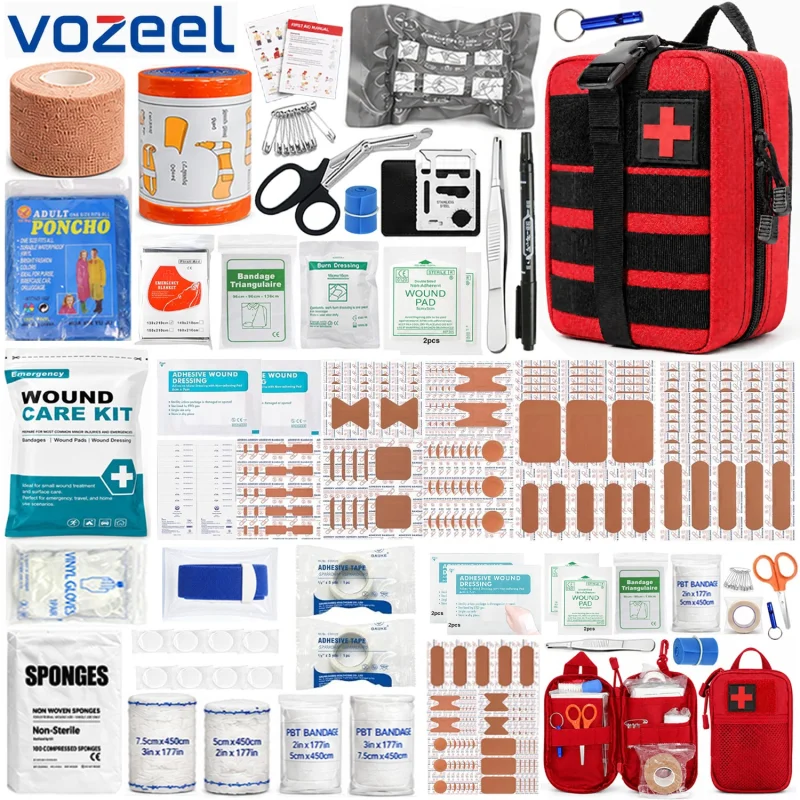
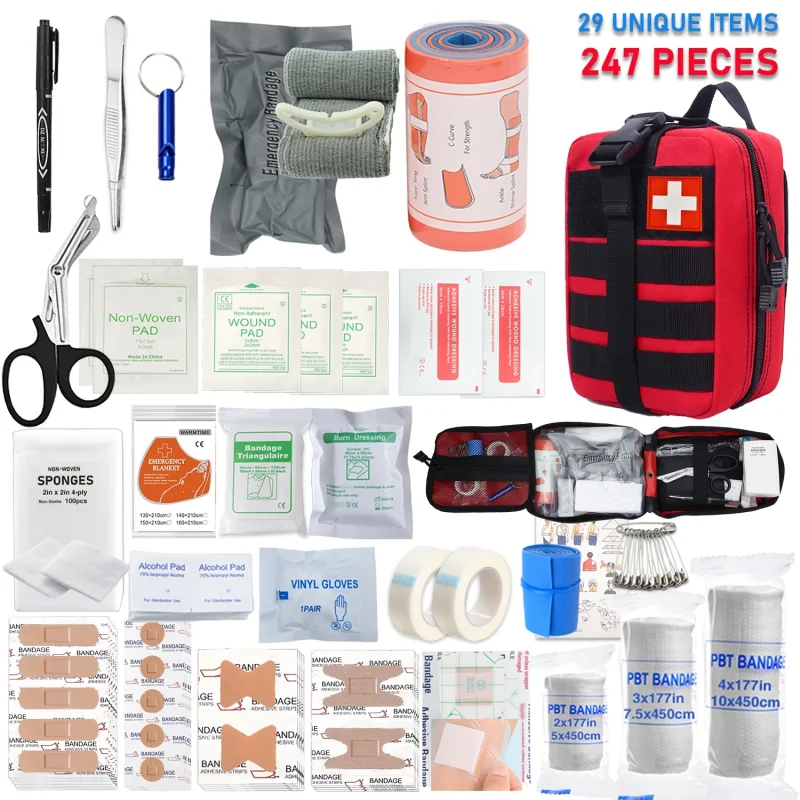
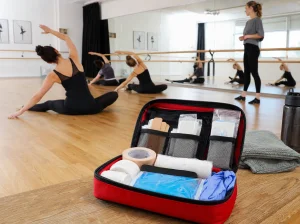
That is why a proper first aid kit for dancers isolates blister care from general clutter. Keep these essentials in their own designated compartment:
- Adhesive fabric bandages in various shapes and sizes
- Hydrocolloid blister pads and moleskin sheets
- Sterile 2x2 and 4x4 gauze pads
- Flexible medical tape and cohesive self-adhering wrap
- Antiseptic wipes and alcohol prep pads
- Nitrile medical gloves
- Instant-activation cold packs
Overpacking breeds chaos. Focus on rapid access to high-frequency items.
Dumping an entire gear bag onto the floor just to find one roll of tape kills the momentum of a rehearsal.
Keep the First Aid Kit in One Fixed Location
Studios run on tight schedules. Faculty, guest choreographers, and student groups swap rooms on the hour.
Without strict systems, gear drifts.
A dance school emergency kit requires one permanent home that everyone knows by heart.
Prime spots include:
- The front desk or administrative counter
- The main faculty sound station
- A wall-mounted cabinet next to the primary rehearsal room door
- A clearly labeled, accessible supply station inside the studio
Pick a location and lock it in. Do not shift the bag during routine cleaning or staging shifts.
Monday it sits at reception. Wednesday it slides behind the stereo rack. Saturday it disappears under costume totes.
Then comes the frantic chorus:
“Who moved the medic bag?”
Dancers have hundreds of counts of choreography to recall. Hunting down basic medical supplies shouldn't be part of the test.
Make Common Supplies Easy to See
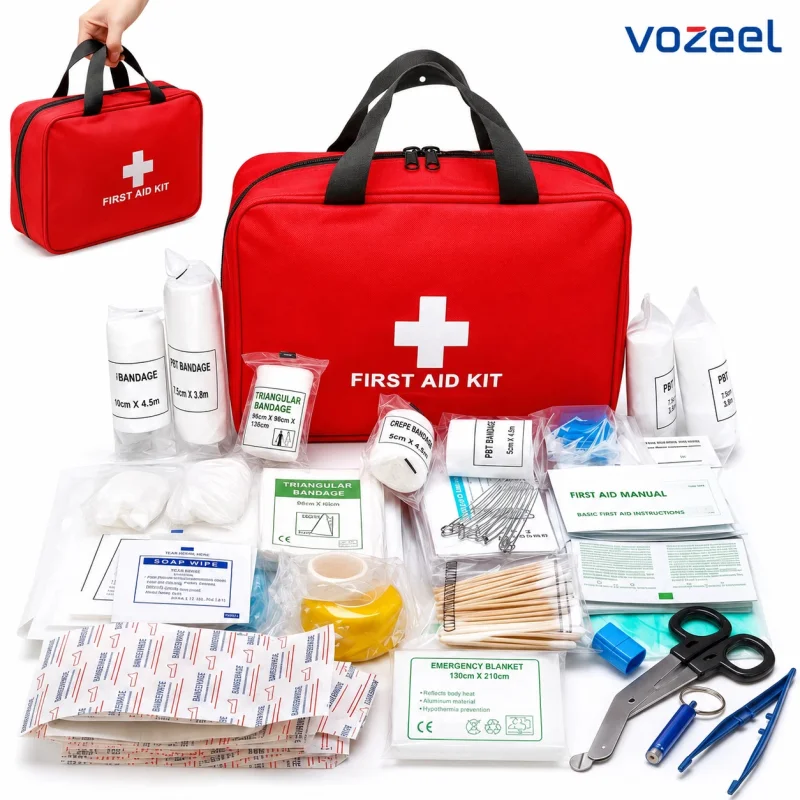
When an issue pops up during a run-through, speed matters. An effective rehearsal room first aid kit utilizes clear vinyl pouches or color-coded mesh dividers so anyone can audit the interior at a glance.
Group items logically:
- Blister pads and moleskin packed together
- Fabric bandages sorted by size
- Sterile gauze and medical tape paired side-by-side
- Instant ice packs stowed flat along the rear wall
- Gloves packed right at the top opening
The workflow should be instinctive:
Unzip.
Identify.
Grab.
Treat.
No digging through unorganized pockets while rehearsal time ticks away.
Ballet Studios May Use Blister Supplies More Often
In classical settings, ballet studio safety supplies lean heavily toward specialized foot care. Hours of pointe work, hard box pressure, and intense repetition create skin breakdown patterns that standard sports teams rarely encounter.
Treating these minor issues early prevents compensation injuries later in the week.
Instructors should foster a culture where dancers address focal pain immediately instead of hiding behind the standard line:
“It’s fine, I can push through.”
Sometimes it is fine. Often, a three-minute tape job saves three weeks of compromised technique.
Cold Packs Are Useful—but They Are Not a Diagnosis
Instant ice packs are standard dance teacher safety supplies because they offer quick relief for soft tissue impact or sudden swelling.
However, cracking an ice pack does not replace a clinical evaluation.
If a dancer exhibits severe pain, rapid localized swelling, joint instability, or an inability to bear weight on a landing, stop the movement immediately. Direct them to an athletic trainer, physical therapist, or physician for evaluation.
“Slap some ice on it and keep dancing” is not an injury protocol.
An ice pack dulls symptoms; it does not diagnose a high ankle sprain or a stress fracture.
Shared Studios Need Shared First Aid Rules
Busy studios host everything from toddler creative movement to pre-professional company rehearsals. Relying on one specific person to manage medical supplies creates an immediate single point of failure.
Every instructor and staff member must know:
- The exact permanent kit placement
- The standard inventory list
- The restocking protocol for depleted supplies
- The routine inspection schedule
- The studio’s emergency action plan and contact tree
“Sarah handles that” fails the moment Sarah steps out for lunch.
Keep the Area Around the Kit Dry and Clean
Dance bags, damp towels, leaky water bottles, and street shoes cluster around perimeter walls during rehearsals. Moisture ruins medical supplies.
Store the kit off the floor in an elevated, dry environment. Dampness destroys bandage adhesive and turns paper packaging into mush.
Audit the contents monthly for:
- Torn, wet, or compromised sterile packaging
- Expired topicals or wipes
- Depleted bandage stocks
- Discharged or accidentally activated cold packs
- Dried-out antiseptic swabs
- Brittle medical tape
Supplies sitting quietly in a bag still degrade over time. Inspect them before you actually need them.
Check the Kit After Performances and Long Rehearsal Days
Tech week, dress rehearsals, and competition weekends burn through inventory fast. What was fully stocked on Tuesday can be completely empty by Sunday night.
Build a simple habit: run a quick 60-second audit right after major studio events.
Restock what was used and return the kit to its home base immediately.
Sixty seconds of effort tonight prevents opening a hollow bag when an ankle turns tomorrow morning.
A Dance Studio First Aid Kit Has Limits
A well-designed first aid kit for dancers handles minor surface issues: hot spots, small abrasions, shallow cuts, and mild skin irritation.
It cannot treat complex joint trauma, suspected fractures, head impacts, or severe heat exhaustion.
When serious injuries occur, clear the floor, keep the dancer calm, and call emergency medical professionals right away.
The kit is built for basic care, not emergency room interventions.
Final Takeaway
Keep your studio response strategy simple and effective:
Isolate blister and foot care products.
Organize supplies in clear, visible pouches.
Maintain fresh, unexpired cold packs.
Anchor the kit to one permanent spot.
Train every faculty member on the protocol.
In a great rehearsal, the only count that matters is the beat of the music.
Keep your supplies organized, so nobody ever has to interrupt the music to hunt for a bandage.
FAQ
Q1: What should a dance studio first aid kit include?
A functional dance studio first aid kit should contain adhesive bandages in multiple sizes, hydrocolloid blister covers, moleskin, sterile gauze pads, medical tape, antiseptic wipes, nitrile gloves, and instant cold packs tailored to your studio's headcount.
Q2: Why are blister supplies useful in a first aid kit for dancers?
Frequent shoe changes, pointe work, and high-friction floor contact cause rapid skin breakdown. Dedicated blister supplies keep minor hot spots from escalating into painful skin tears that disrupt training.
Q3: Where should a dance school emergency kit be stored?
A dance school emergency kit must be kept in a fixed, dry, visible location known to all faculty members—such as the front desk counter, sound cabinet area, or a dedicated wall mount inside the main rehearsal room.
Q4: Can a rehearsal room first aid kit be used to diagnose ankle or muscle injuries?
No. A rehearsal room first aid kit provides basic comfort care for minor surface issues. Suspected sprains, strains, fractures, or joint instability require immediate rest and professional medical evaluation.