One of the best parts of camping is finally getting away from the city, the noise, and the nonstop phone notifications. But let’s be real: outdoor freedom also comes with a little attitude. If someone gets hurt, help may not show up like a food delivery order in 20 minutes. There may be no pharmacy, no clinic, and your phone signal might decide to completely give up.
That is when a reliable camping first aid kit becomes more than just the “just in case” item in your backpack. It becomes the safety teammate that quietly waits in the background, then shows up when things get serious.
When an injury happens in the wilderness, the first step is not to panic or start digging through your bag like you are searching for buried treasure. Stop, take a breath, and check how serious the situation is. Is there heavy bleeding? Can the person walk normally? Are there signs of dizziness, trouble breathing, possible fracture, or a serious allergic reaction? If the injury looks serious, contact emergency help as soon as possible, keep the injured person stable and warm, and avoid unnecessary movement.
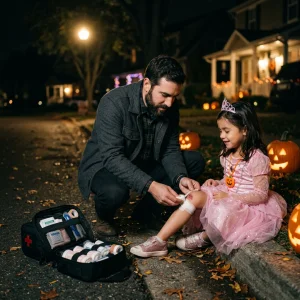
For small cuts and scrapes, the basic steps are simple: clean, cover, and watch. Use clean water or antiseptic wipes to clean the wound, then cover it with gauze, an adhesive bandage, or a dressing. Do not underestimate “small” wounds outdoors. Dirt, sweat, and bacteria are pretty good at finding opportunities. Taking care of the wound early can save a lot of trouble later.
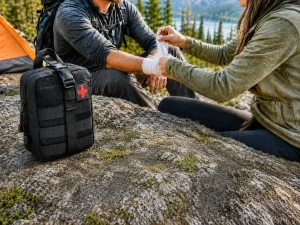
For sprains or strains, do not try to tough it out and keep hiking. That may sound heroic, but in the backcountry it usually just makes the situation harder. Let the injured area rest, wrap it with an elastic bandage if available, and elevate it when possible. If you have an instant cold pack, use it for a short period to help reduce swelling.
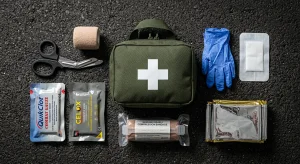
Burns, insect bites, and blisters are also common camping problems. For minor burns, cool the area first. For bug bites, use anti-itch treatment if available. For blisters, keep the area clean and avoid popping them unless necessary. A well-prepared hiking emergency kit should cover these common outdoor issues, not just carry a few bandages and pretend to be fully stocked.
Of course, real wilderness first aid is not only about knowing how to use a first aid kit. Before you go, learn your route, check the weather, know the nearest help points, and tell a friend or family member where you will be. Your first aid kit is there to help when something goes wrong, but planning ahead is your first layer of safety.
At the end of the day, outdoor injury response comes down to a few basics: stay calm, assess the situation, clean wounds, protect the injury, keep watching for changes, and get help when needed.
A good camping first aid kit will not turn you into a medical expert overnight. But when help is far away, it can give you more options, more confidence, and a lot more peace of mind. And honestly, when you are out in the wild, being prepared is always a good look.