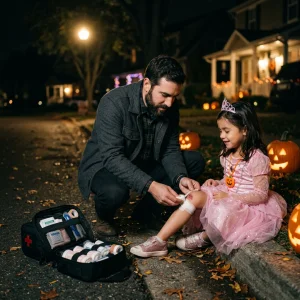
Bowling alleys run on energy, crowd momentum, and constant movement.
The lights drop, the arcade thrums in the background, a bowler buries a double in the tenth frame, and the set bursts into cheers:
“There it is!”
Gutter ball on the next frame?
“We’ll pretend that never happened.”
Behind the neon glow and pitcher deals, running a bowling center involves real physics. Fourteen-pound polished balls roll down slick wood or synthetic lanes, hundreds of pairs of leather-soled shoes swap feet daily, drinks spill near wooden approaches, and high-velocity machinery cycles continuously behind the pin deck.
That is why a proper bowling alley first aid kit cannot be a mysterious plastic box buried under a stack of paper score sheets.
Your team needs to know where it sits and grab what they need without missing a beat.
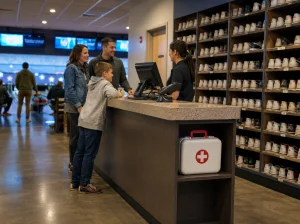
Keep the Main First Aid Kit at the Front Desk
The control counter is the operational nerve center. It stays staffed, sits in full view of the house, and serves as the immediate reference point for guests and crew alike.
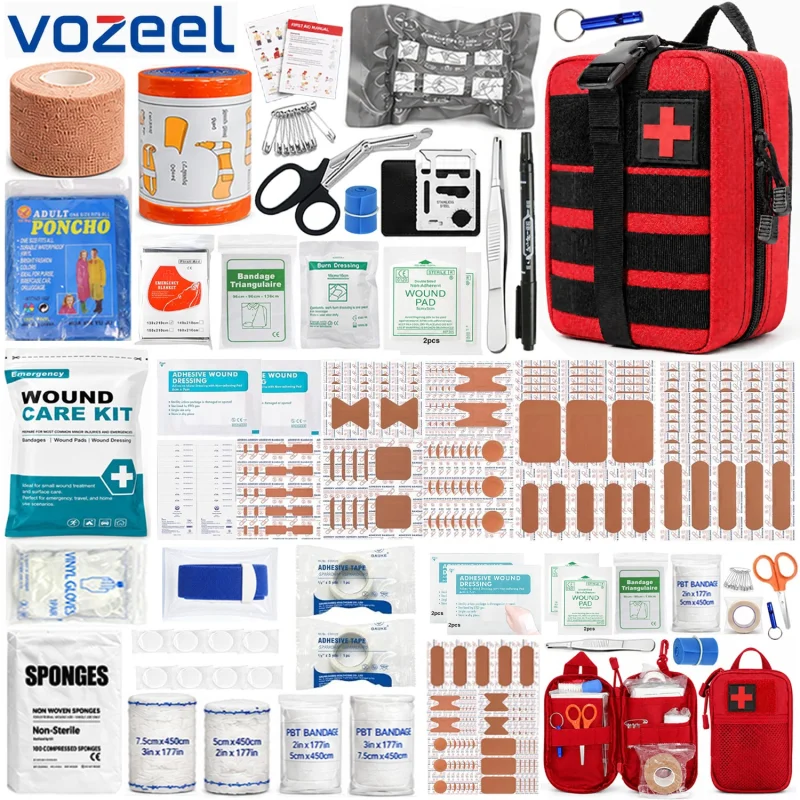
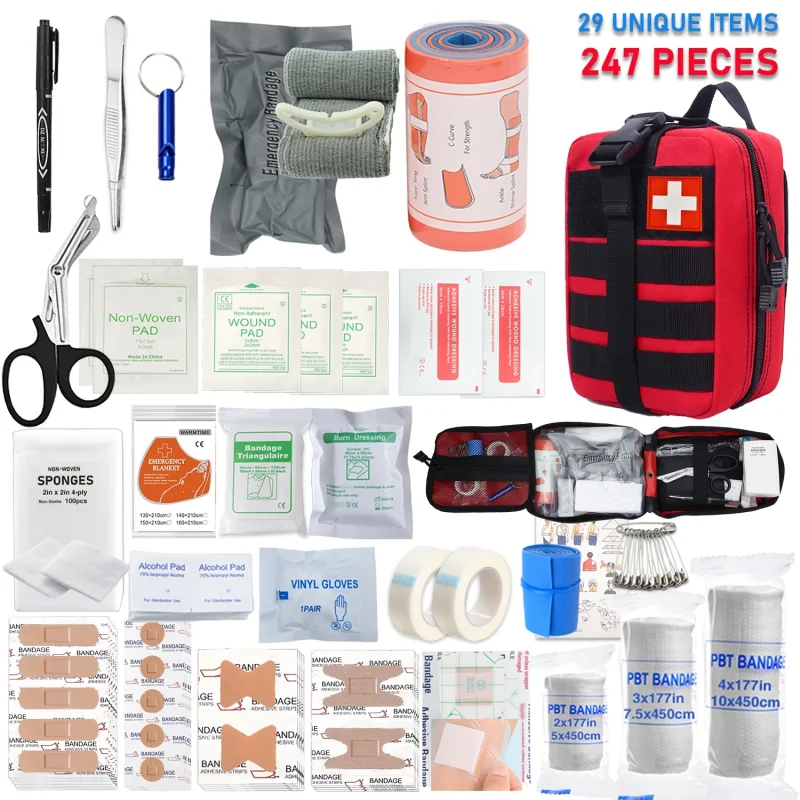
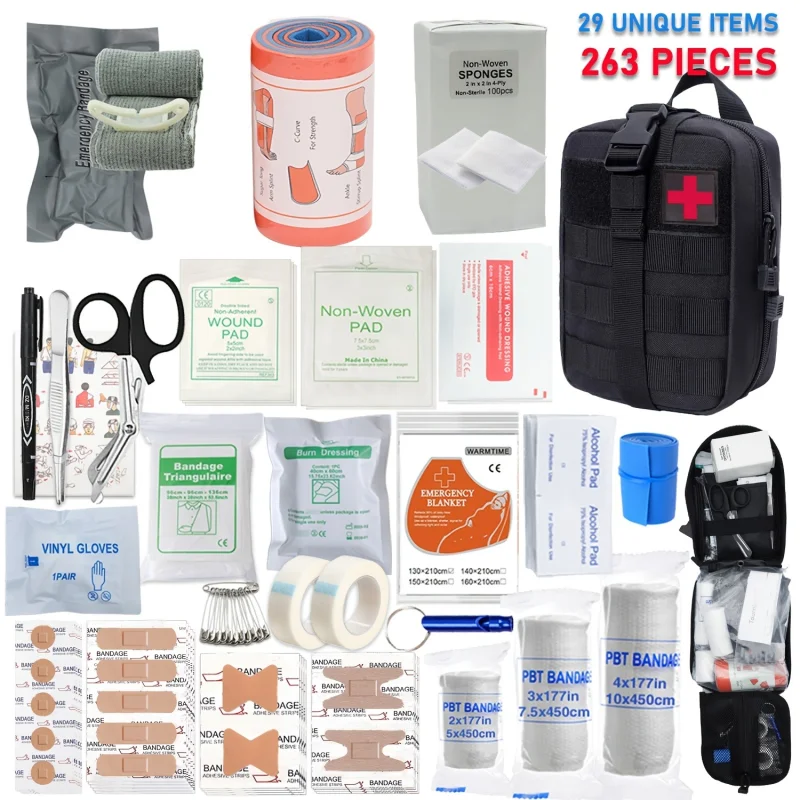
At minimum, your main bowling center first aid kit should hold:
- Heavy-duty adhesive bandages in multiple sizes
- Antiseptic wipes and sting-relief pads
- Sterile gauze pads and flexible roller bandages
- Medical-grade adhesive tape
- Nitrile gloves (powder-free)
- Instant cold packs
- A quick-reference first aid guide
Mounting your primary stash at the front desk makes practical sense. But across a 40-lane center, relying on one isolated spot creates unacceptable delay.
If a bowler on Lane 36 slices a finger on a chipped glass and the nearest bandage rests 200 yards away at the front counter, the situation gets clumsy fast:
“Good news: we have medical supplies.”
“Bad news: I have to weave through two birthday parties and an arcade to grab them.”
Consider a Portable Kit Near the Lane Area
Expansive centers run smoother when they park a secondary kit at a mid-floor desk, shoe counter, or lane service pod.
This secondary family entertainment first aid kit does not need full trauma gear. It just needs high-turnover basics so staff can address minor scrapes right where they happen.
The golden rule here is fixed placement.
Never keep the kit at the control desk on Friday and slip it behind the mechanic room door on Sunday.
The moment a crew member asks:
“Where did somebody put the kit?”
Your emergency protocol has turned into a search party.
Wet Floors Can Become the Real Problem
The primary threat on an approach zone rarely comes from a flying ball.
It comes from spilled draft beer.
Or water tracked in on street shoes from a rainy parking lot.
Or ice cubes dropped during a kids party.
The instant a slick leather shoe meets a drop of liquid on the approach, gravity takes over instantly.
That is why bowling alley safety supplies must pair directly with active floor management. Spills need instant wipes, caution cones must go down immediately, and staff must routinely scan approach areas for stray debris.
A bandage covers a scraped knee after a fall.
A dry floor towel and a safety sign prevent the fall entirely.
Bowling Balls Need a Little Respect
Bowlers frequently misjudge heavy house balls—especially young kids and beginners lifting a 12-pound ball for the first time.
Give players space to move safely. Keep ball returns clear of clutter so bowlers are not tripping over gear bags or bumping neighbors while grabbing equipment.
In busy venues, sturdy indoor recreation safety supplies work best alongside active floor oversight. Keep house balls sorted by weight on proper racks, clear of main walkways.
Bandages handle minor cuts.
They do nothing for a smashed toe.
Rental Shoes Add Another Safety Detail
Rental shoe counters move high inventory volume on peak nights. That turnover introduces two distinct hazards: cluttered walkways and moisture transfer.
Keep shoe racks neat. Loose shoes, drop bins, and guest footwear must never spill into concourse lanes where people walk in socks or slick soles.
Watch closely when guests head to restrooms or snack bars in rental shoes. Stepping in a puddle and stepping back onto the approach causes leather soles to stick instead of slide—throwing the bowler forward onto the lane.
Rental shoes should slide smoothly.
They should never trigger an accidental launch.
Keep Guests Away From Ball-Return and Mechanical Equipment
The sweep bar, pinsetter, and subterranean ball returns are heavy machines running under high torque. Guests must never reach into a ball return or cross the foul line to clear a jam.
When a ball stalls in the gutter or a pin jams the elevator, guests must call a staff member.
A guest saying:
“I can probably reach in there and kick that free.”
Should never hear:
“Go right ahead.”
Never happen. Clearing jams belongs exclusively to trained mechanics following proper lockout/tagout procedures.
Do Not Forget the Employee Areas
Your staff faces different physical risks than your guests. A dedicated bowling staff emergency kit should be mounted in back-of-house work zones, including:
- The pinsetter mechanic workshop
- Behind the rental shoe desk
- Staff break rooms
- Kitchen and snack bar prep lines
Pinsetter mechanics work with heavy metal castings, belts, and hand tools. Kitchen staff handle hot griddles and knives. Service staff routinely lift heavy ball totes and cases.
Protecting your team matters just as much as keeping guests safe.
When the final lane turns off, your crew still has two hours of maintenance ahead.
Family Bowling Centers Need Clear First Aid Locations
When a corporate mixer fills the lounge, two birthday parties take lanes 1-12, and league night packs the rest of the center, floor traffic peaks. Clear staging saves critical seconds.
A simple facility protocol looks like this:
- Primary wall-mounted kit at the front control counter
- Secondary portable kit at the mid-floor desk
- Heavy-duty industrial kit inside the mechanic shop
- A named manager tasked with weekly inventory checks
Keep it clear and predictable.
Every employee on shift should answer "Where is the nearest kit?" without hesitation.
Check Supplies Regularly
A medical kit is not a wall fixture you mount and ignore for three years.
Set a recurring schedule to audit supplies for:
- Missing items from undocumented uses
- Expired antiseptic wipes or eye washes
- Torn packaging or broken sterile seals
- Dried-out alcohol pads
- Hardened cold packs that lost flexibility
- Degraded adhesive on older bandages
The worst time to find an empty box is while wrapping a paper towel around a bleeding thumb.
A First Aid Kit Has Limits
A standard bowling alley first aid kit handles minor localized injuries—small cuts, light abrasions, blisters, and basic cold pack needs.
It does not replace emergency medical services or strict site safety rules.
For severe bleeding, head trauma, suspected fractures, loss of consciousness, or machinery accidents, skip the cabinet, stabilize the victim, and call 911 immediately.
The kit addresses minor scrapes.
It was never meant to replace an emergency room.
Final Takeaway
A solid safety setup for any bowling center relies on basic execution:
Mount your primary kit at the main control desk.
Deploy a compact secondary kit near the lanes in larger centers.
Stock mechanic shops and kitchens with heavy-duty supplies.
Clean spills immediately and keep approaches dry.
Audit and restock cabinets on a strict monthly schedule.
Your guests come to bowl strikes, order food, and enjoy the night.
Your safety supplies should stay quietly in the background.
When needed, they must be stocked, accessible, and ready to use.
FAQ
Where should a bowling alley first aid kit be stored?
Mount the primary bowling alley first aid kit in a clear, visible location at the main control desk. In larger facilities, place a secondary kit at a mid-floor service counter or shoe desk.
Why should bowling centers pay extra attention to wet floors?
Leather-soled bowling shoes offer zero grip on wet surfaces. Small drink spills near the approach cause sudden slips and hard falls. Combining fast spill response with practical bowling alley safety supplies keeps bowlers safe.
Does a family bowling center need a larger first aid kit?
Not necessarily larger, but better positioned. A family entertainment first aid kit layout should focus on fast access across high-traffic zones like arcades, snack counters, and lane approaches rather than one massive kit hidden in an office.
Can a bowling center first aid kit handle serious machinery-related injuries?
No. A standard bowling center first aid kit provides basic care for surface cuts and minor bumps. Serious incidents involving pinsetters, conveyors, or heavy mechanical gear require immediate 911 calls and emergency response procedures.