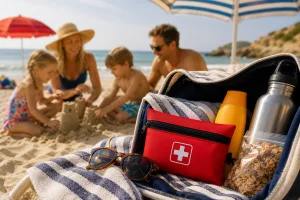
A beach day usually starts with the usual lineup: swimsuits, snacks, towels, sunscreen, toys, and a cooler that somehow gets heavier every time someone adds “just one more thing.”
Then there is the rest of the beach experience: sand, shells, rocks, picnic tables, flip-flops, and kids or adults moving around like they are in a hurry to make the most of the day. That is where small scrapes and little cuts like to make an appearance.
Maybe someone catches a finger on a shell. Maybe a quick run across the sand turns into a scraped knee. Maybe a drink can opens a little too enthusiastically. Or maybe a long day of walking leaves a heel feeling like it has something to say.
Most of these are not big emergencies. But when the parking lot is far away and all you have nearby is sand, sunscreen, and a half-finished bag of chips, a beach first aid kit suddenly becomes one of the most useful things you packed.
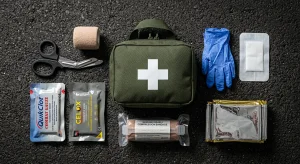
A summer first aid kit does not need to be huge. It just needs to be easy to carry, easy to find, and ready for the small stuff. Adhesive bandages, gauze pads, antiseptic wipes, alcohol pads, medical tape, disposable gloves, tweezers, scissors, elastic bandages, and burn dressings are all practical basics for a day outside.
Tweezers are especially worth bringing. Sand has a way of getting into places where it was definitely not invited.
For a family trip to the beach, lake, or park, a portable kit with a good mix of everyday supplies is usually the easiest option. A 157-piece kit can keep bandages, cleaning supplies, gauze, and basic tools together in one place without taking over the whole beach bag. You can grab it and go instead of gathering supplies from different drawers right before leaving.
Keep the kit somewhere easy to reach, like a beach bag, picnic bag, or daypack. Do not bury it under towels, snacks, and toys unless you enjoy playing “we definitely brought it, so where did it go?” when someone needs a bandage.
Keeping a backup kit in the car is helpful too, but do not rely on that one alone. A first aid kit is much more useful when it is close by, not halfway back through the parking lot.
Before heading out, take a quick look at your supplies. Are the wipes still fresh? Are there enough bandages? Does the tape still stick? Did anything get used on the last trip and never get replaced?
A well-organized outdoor family first aid kit will not take away from your beach day. It simply helps you handle small problems quickly so everyone can get back to building sandcastles, eating snacks, and taking way too many photos.
FAQ
1.What should be in a beach first aid kit?
A beach first aid kit should include adhesive bandages, gauze pads, antiseptic wipes, alcohol pads, medical tape, disposable gloves, tweezers, scissors, and elastic bandages. These are useful for minor scrapes, small cuts, and everyday outdoor bumps.
2.Do I need a first aid kit for a lake or park trip too?
Yes. Lakes, parks, and picnic areas can bring the same kinds of small problems, including scrapes, little cuts, insect bites, and minor outdoor injuries. A portable kit is easy to bring and does not take up much space.
3.Should I keep the first aid kit in the beach bag or in the car?
Keep the main kit in your beach bag, picnic bag, or daypack so it is easy to reach. You can also keep a backup kit in the car, but do not depend on the car kit alone.
4.Does a beach first aid kit need to be large?
Not usually. For a family day trip, a compact and organized portable kit is often the best fit. A 157-piece kit can provide a useful range of basics without feeling too bulky.
5.What should I use for a scrape from sand or shells?
Antiseptic wipes, alcohol pads, gauze, adhesive bandages, and medical tape can all be useful. Clean away sand or dirt first, then cover the area as needed.
6.How often should I check a beach first aid kit?
Check it before summer outings and refill it after each trip if anything was used. Look for dried-out wipes, low bandage supplies, damaged packaging, or tape that no longer sticks.