Bandages VS Gauze VS Elastic Wraps: What’s the Difference?
Open almost any first aid kit and you will probably find adhesive bandages, gauze pads, and elastic wraps. At first glance, they can all look like “stuff for covering injuries,” so it is easy to wonder: what is the actual difference?
They are really three different teammates in your kit. One is for quick little cuts, one is for covering and absorbing, and one is mainly there for support and securing. They may all be small, but they definitely do not do the same job.
Adhesive Bandages: The Quick Fix for Small Cuts
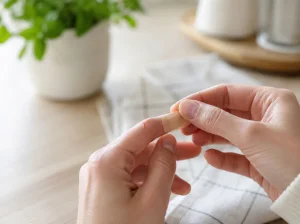
Adhesive bandages are best for small, shallow cuts and scrapes. Think paper cuts, minor kitchen nicks, a small scrape on a knee, or a spot that keeps rubbing against a shoe.
Their job is simple: cover the area and help keep dirt and everyday friction away. They are the kind of thing you grab when you want to clean up a small problem and get back to your day without making it a whole event.
That said, an adhesive bandage is not a magic fix for everything. If a wound is large, deep, still bleeding heavily, or looks unusual, one little bandage is probably not going to be the answer. Not the move.
Gauze: Better for Larger Areas and Extra Coverage
Gauze is more like the reliable workhorse of a first aid kit. It is commonly used for larger scrapes, minor wounds that need more coverage, or situations where a clean layer may help absorb a small amount of fluid.
Unlike an adhesive bandage, gauze is flexible. You can choose a pad or roll that fits the area, then secure it with medical tape or a wrap. For a scraped knee, a larger arm scrape, or a spot where several tiny bandages would feel ridiculous, gauze usually makes more sense.
An easy way to remember it: adhesive bandages are for “small and quick,” while gauze is for “a little bigger and needs more coverage.”
Elastic Wraps: Mainly for Support and Securing
Elastic wraps, sometimes called elastic bandages, are not really designed to cover an open wound by themselves. Their main role is basic support, light compression when appropriate, or helping keep gauze in place.
For example, an elastic wrap may be useful for supporting a sore wrist, ankle, or knee after a minor twist, or for holding a gauze pad where it needs to stay put.
Just do not wrap it super tight and call it a day. If fingers or toes feel numb, cold, tingly, or look unusually pale or blue, loosen it. Tighter does not automatically mean better.
The Easy Way to Remember the Difference
- Adhesive bandages: Quick coverage for small cuts and scrapes
- Gauze: Coverage, absorption, and protection for larger minor wounds
- Elastic wraps: Basic support, securing, or helping hold gauze in place
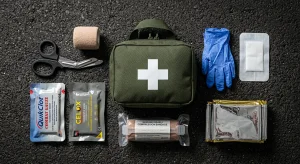
A well-rounded first aid kit usually includes all three. Because, honestly, everyday accidents never send a calendar invite telling you exactly what you will need.